The API Is Idle. The Deployment Still Bills.
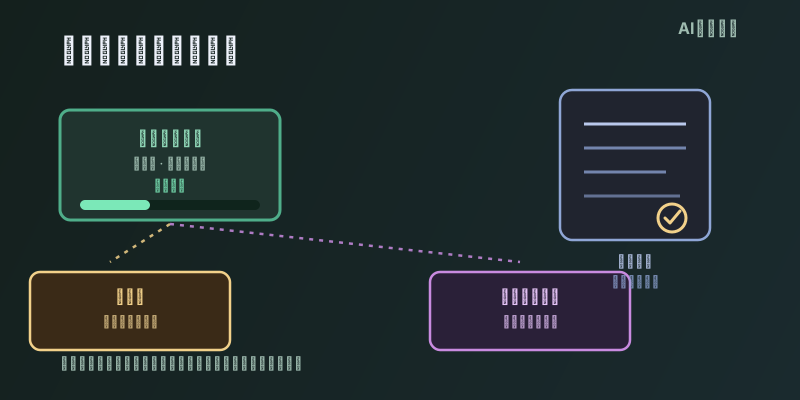
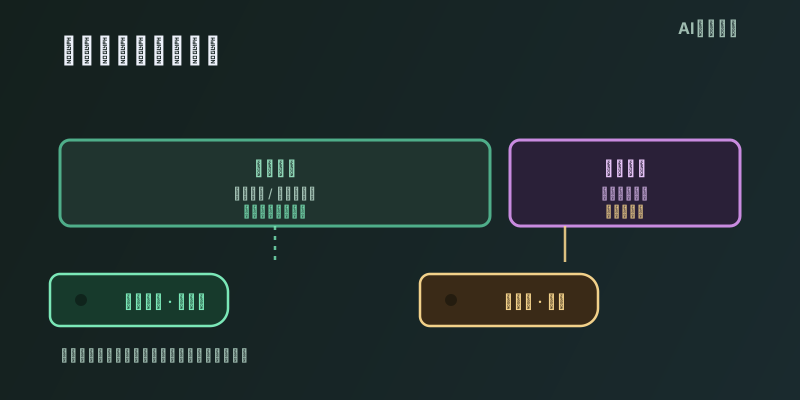
Dedicated capacity bills while running, even with no calls. Deleting a key does not stop the clock. PTU bills bought capacity, and overflow can add tokens.
This page rounds up in-depth, practical guides covering AI subscription sign-up, payment channels, virtual cards, stablecoin payments, network checks, renewal recovery, account security, team fund management, cancellation & refunds, exchange rates & fees, student discounts, invoices & reimbursement, family plans, fund reserves, virtual card decline troubleshooting, cross-chain transfer recovery, and tool selection — full details in each guide.
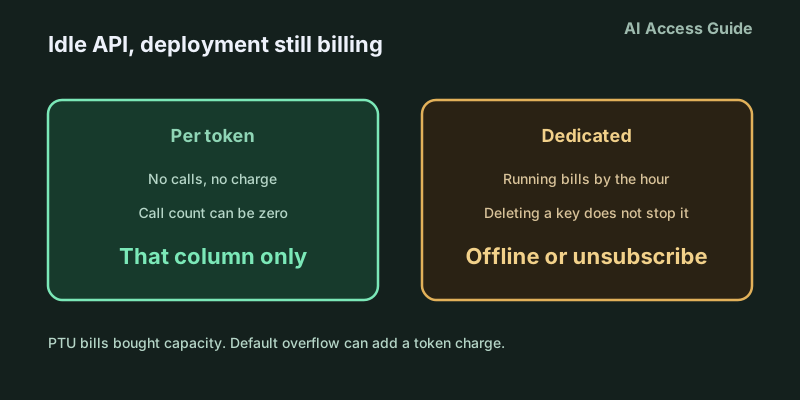
Dedicated capacity bills while running, even with no calls. Deleting a key does not stop the clock. PTU bills bought capacity, and overflow can add tokens.
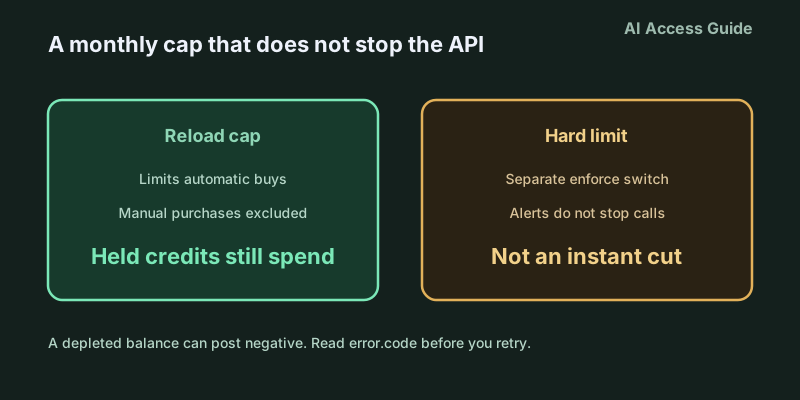
A monthly reload cap limits automatic credit buys, not credits you already hold. Alerts do not stop traffic. A hard limit is a separate switch.
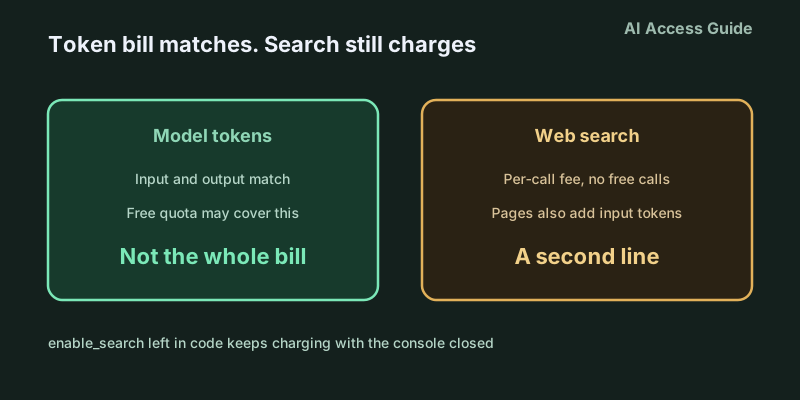
Built-in web search has no free calls. Strategy fees sit beside input tokens. enable_search left in code keeps charging. MCP free calls do not pay this line.
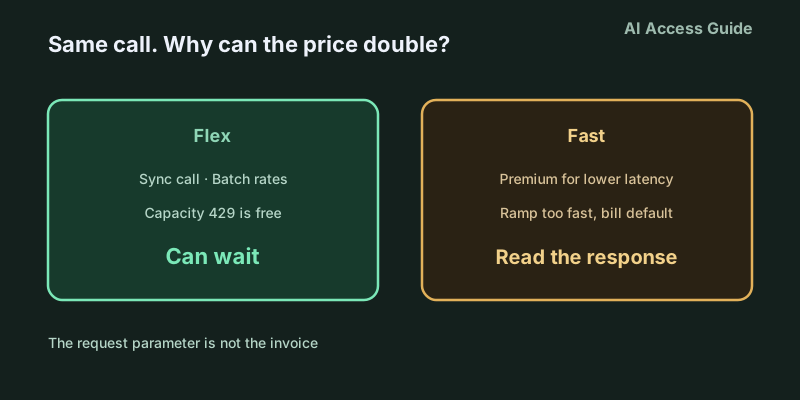
Flex bills at Batch rates and a capacity 429 is free. Fast can fall back to default and bill standard. The response service_tier is what you paid.
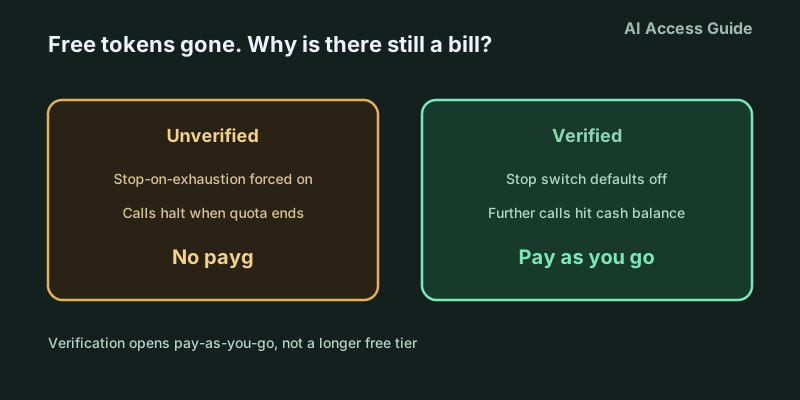
Bailian stops unverified accounts when free tokens end. After real-name auth the stop switch defaults off, so extra calls bill pay-as-you-go. Quota covers Beijing realtime only, not Batch or Token Plan keys. Volcengine overage defaults off.
OpenAI Batch is 50% cheaper than the sync API, 24h window, separate rate-limit pool. Expired jobs still bill completed work. Anthropic Message Batches also charge 50% on input and output.
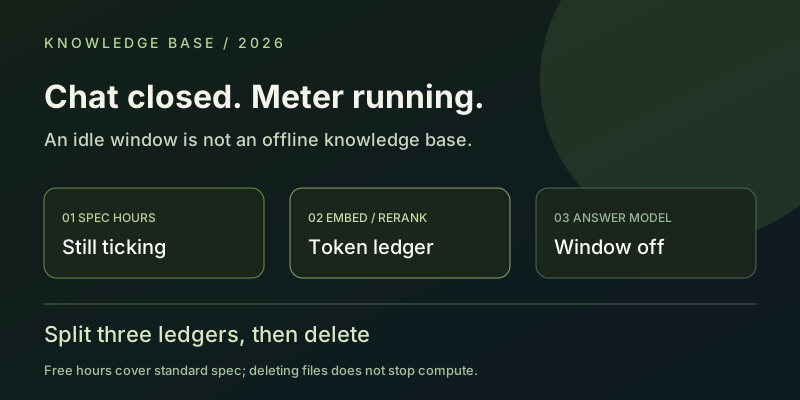
Closing chat does not stop knowledge-base spec hours. Aliyun splits spec from embedding, rerank and answers; free hours cover standard spec only. Volcengine keeps compute until you delete the knowledge base.
The same virtual card can renew ChatGPT Plus and still fail Claude or OpenAI API credits. OpenAI splits those bills and blocks prepaid cards for API credits; Claude Console needs a matching billing country. Split the rails before swapping models.
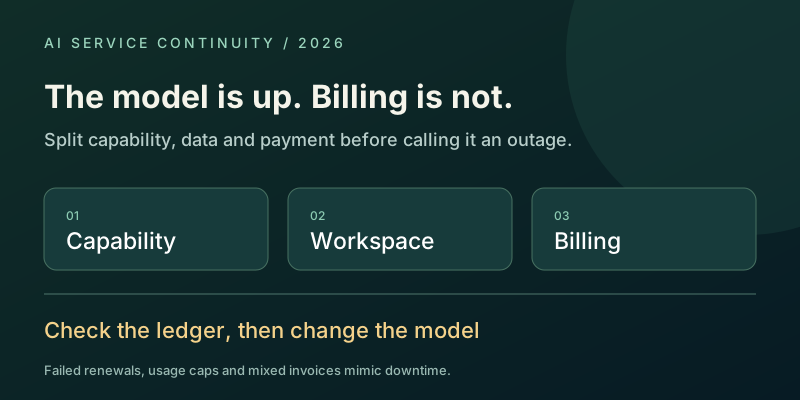
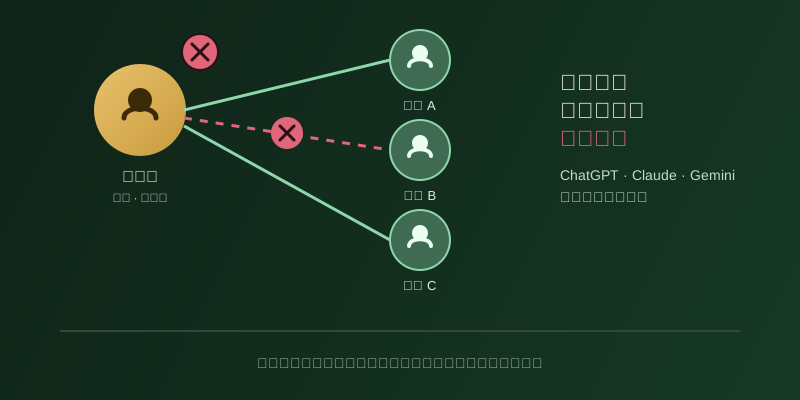
An AI service is usable only when capability, workspace data and payment all keep running. A sudden “it stopped working” should be split into quota, exportability and whether the renewal actually charged. Mix the three layers and teams will swap models to fix a declined card.
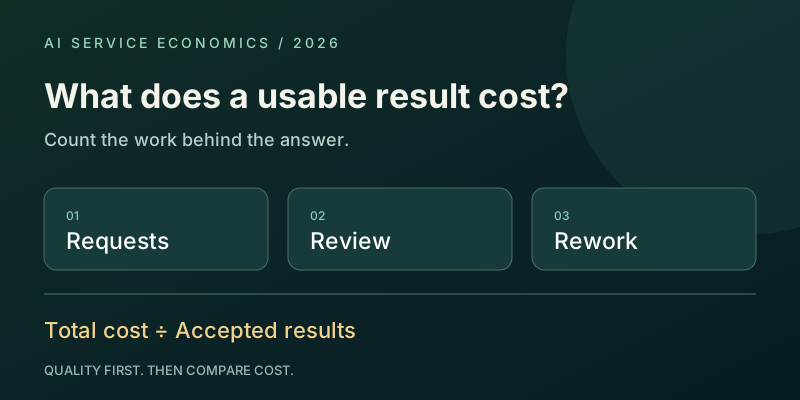
Seats, tokens and requests describe what an AI vendor sells. Accepted task results describe what your team needs. A fast response that requires extensive checking or rewriting may save waiting time while adding work elsewhere. Evaluate the entire delivery process before deciding that an AI service is cheap.
Offboarding disables HR accounts same day, but the RAM sub-account and DeepSeek or Qwen API key often keep billing since HR and IT run separate timelines, and billing review catches it too late.
Temporary/incognito chat skips history and training, but a safety-moderation exception can still retain flagged content and route it to human review.
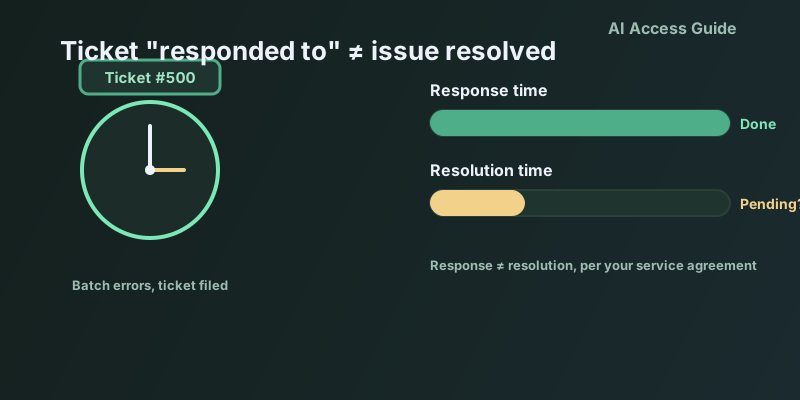
An SLA response-time promise only covers when support first replies, not when the issue is actually resolved; conflating the two throws off an incident plan's fallback window.
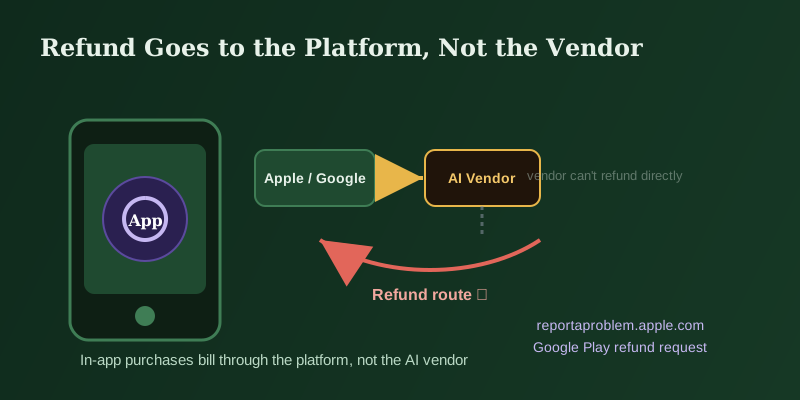
In-app purchase subscriptions bill through Apple or Google, not the vendor; refunds route through the platform's own request page, going to vendor support first just wastes days.
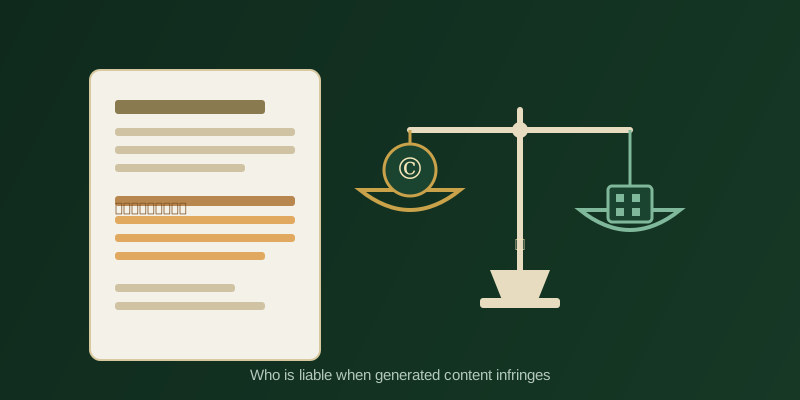
If DeepSeek or Qwen API output gets flagged for copying text or images, liability and payout caps sit in an agreement clause few companies read closely.
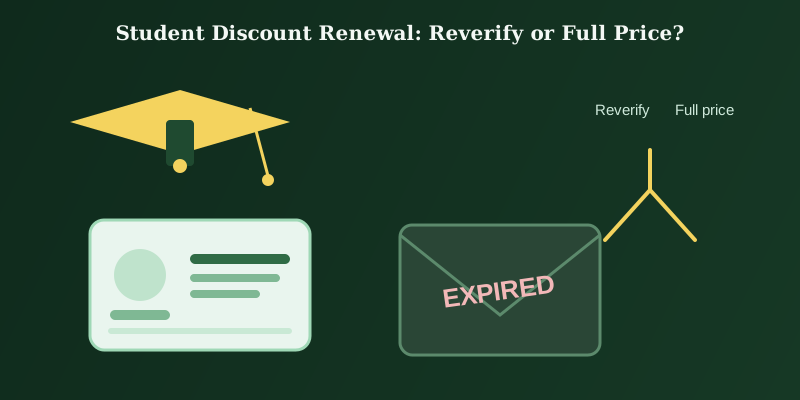
Whether student verification is one-time or requires yearly reverification varies by platform; a lapsed education email at renewal can mean full-price billing or a pause, depending on the product.
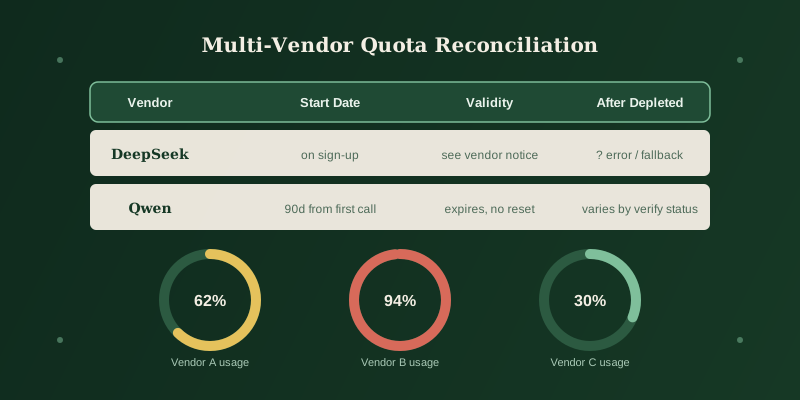
Running DeepSeek and Qwen together for redundancy? Each vendors free-quota start date, validity, and post-depletion rule differ, so depleted quota often reads as a system failure.
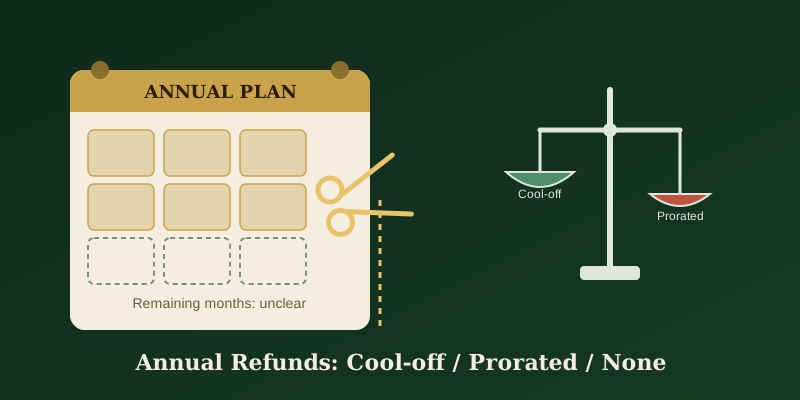
Annual plans discount the price, but mid-term refunds vary by platform: a 7-14 day cooling-off window, then either a prorated refund with its own gotchas, or none at all.
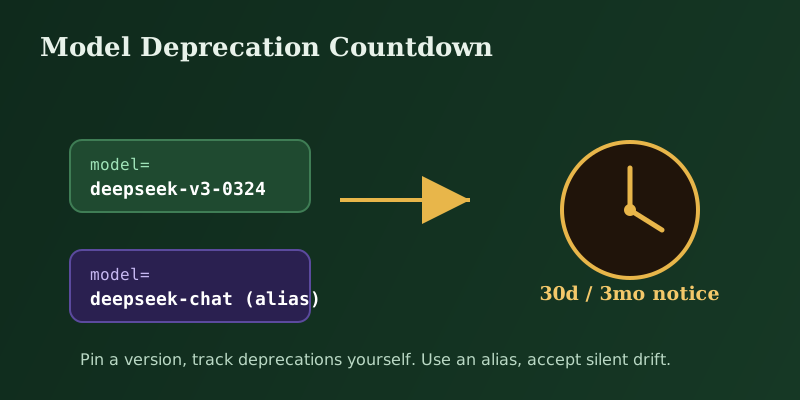
Chinese LLM vendors retire old model API versions fast; pinning a version means you track deprecation notices yourself, using the latest alias means output can shift silently, and notice windows vary by vendor.
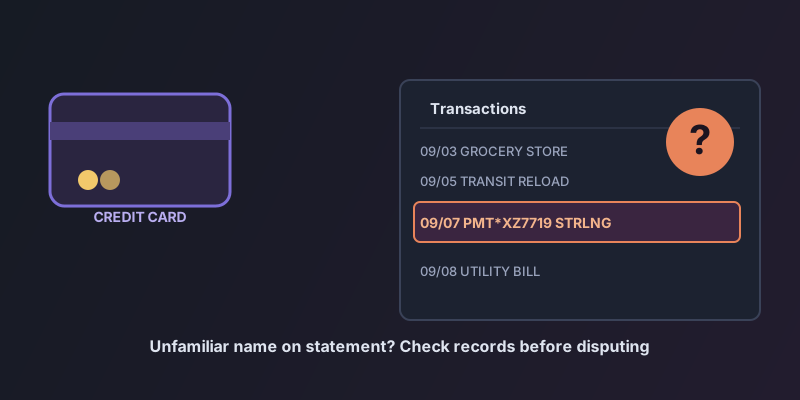
Many overseas AI subscriptions bill under a name that doesn't match the product; disputing it as fraud can get the account flagged as fraudulent and the subscription suspended.
Enterprises sending overseas data to DeepSeek or Qwen APIs assume domestic and overseas nodes share one rule set, but node location and applicable compliance frameworks can differ entirely.
ChatGPT Team, Claude Team, and Gemini Advanced seats belong to whoever creates and pays for the plan, not to invited members; once the owner cancels, other seats usually lose access fast, and grace periods vary by platform.
Prepaid LLM API credit packs cost less than pay-as-you-go, but leftover balance from a mis-sized budget is common; whether it's refundable or transferable to another affiliated account depends entirely on the vendor's own contract.
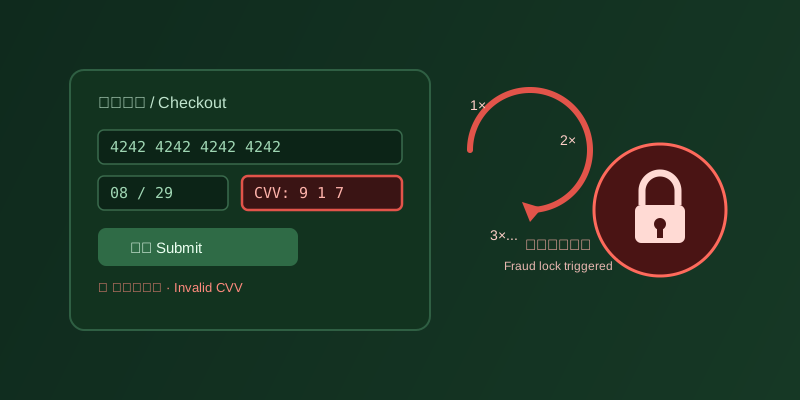
Browsers rarely autofill CVV, so typos happen; retrying submit repeatedly looks like fraud probing to issuer risk systems and can trigger a temporary lock, even as the real cardholder.
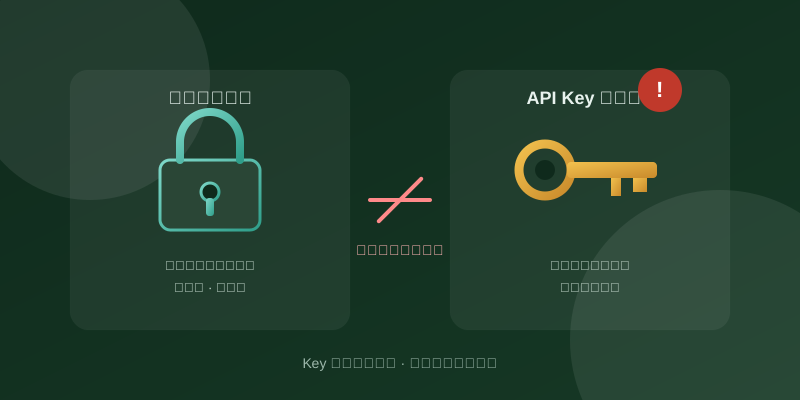
A leaked DeepSeek or Qwen API key hardcoded in a public repo lets attackers run up charges while login history stays clean, since password and key are separate credentials; revoke the key in console, not the password.
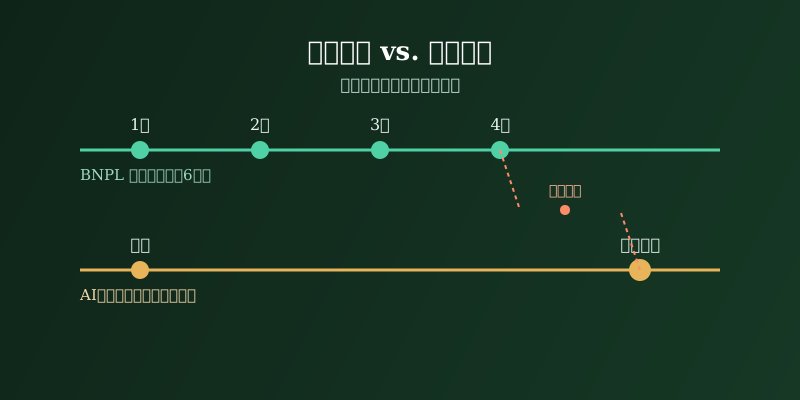
BNPL installments and yearly subscription renewal run on two independent clocks; canceling early usually won't get back what was already paid to the merchant, so check refund policy and renewal-date overlap first.
DeepSeek and Qwen APIs detect whether a request prefix repeats a prior call and bill the matched portion at a lower rate; put fixed setup first and variable input last to raise your hit rate, per official docs.
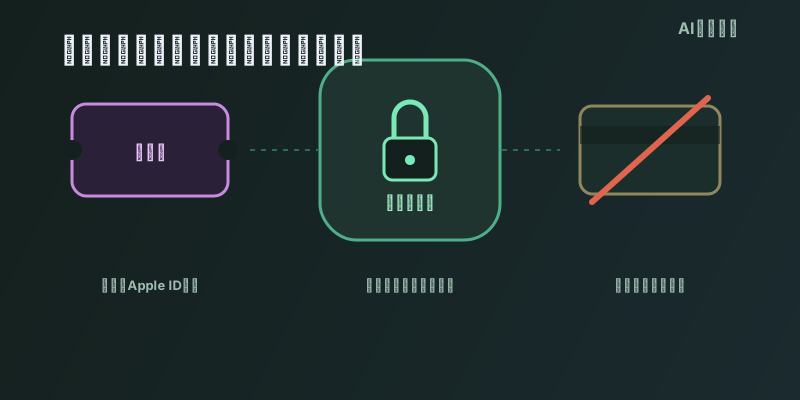
Top up Apple ID balance via gift card and pay an AI subscription: a refund defaults to the original payment method, so it returns to balance, not cash or a bank card — a different money path than a credit card refund.
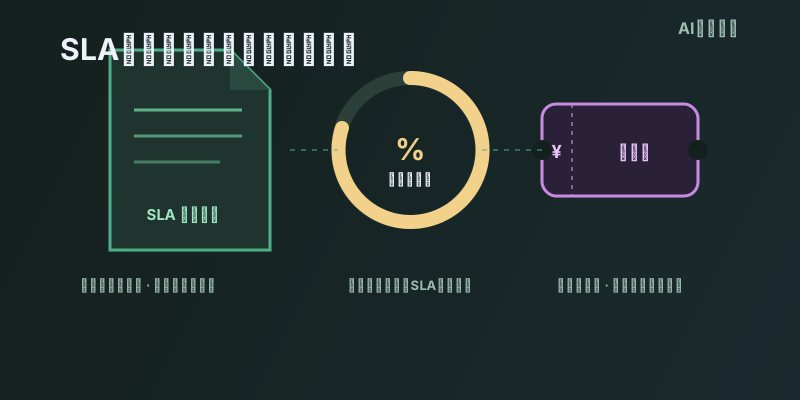
Enterprise DeepSeek/Qwen API SLA clauses only promise availability and response time, not output quality; compensation is a proportional voucher requiring an active claim with your own outage logs.
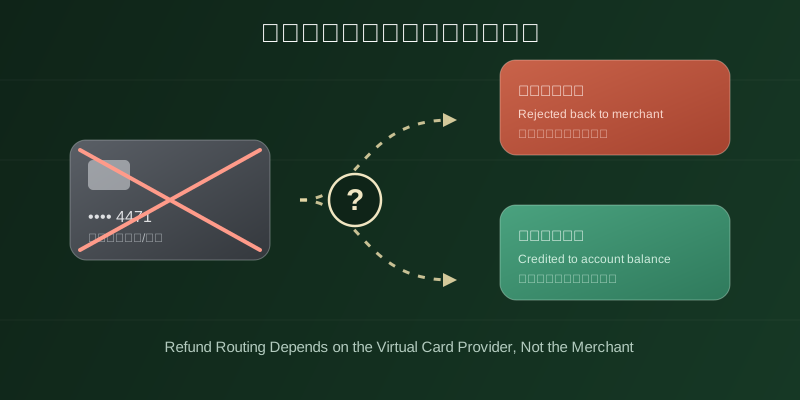
Refunds travel the card network's settlement rails, which recognize an account and card number, not you; a closed or expired virtual card means the provider, not the merchant, decides the outcome.
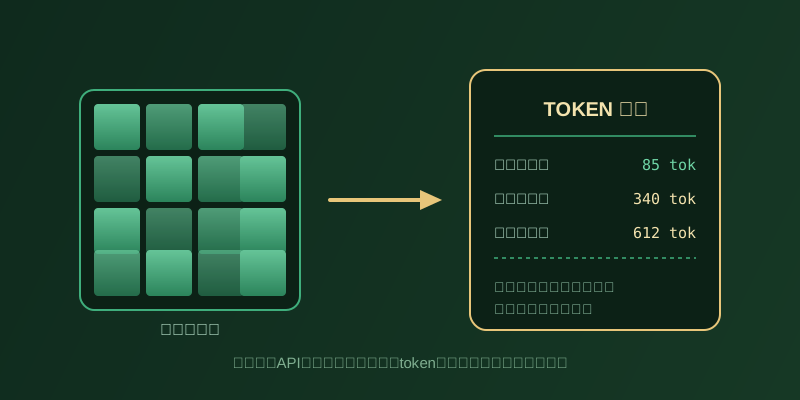
DeepSeek and Qwen vision APIs convert an image into tokens before billing, typically tied to resolution and precision mode, not text-token math; test real bills on samples before scaling image-heavy apps.
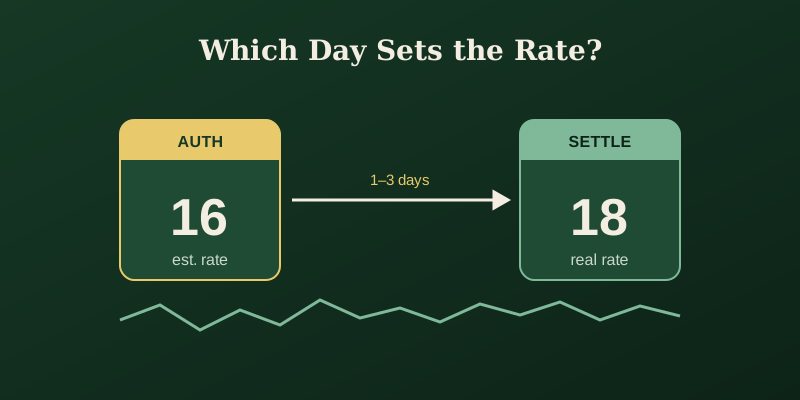
Wise or Revolut billing an AI subscription? The rate shown at checkout is an estimate; the real charge usually follows the settlement date, so monthly amounts can drift with FX moves.
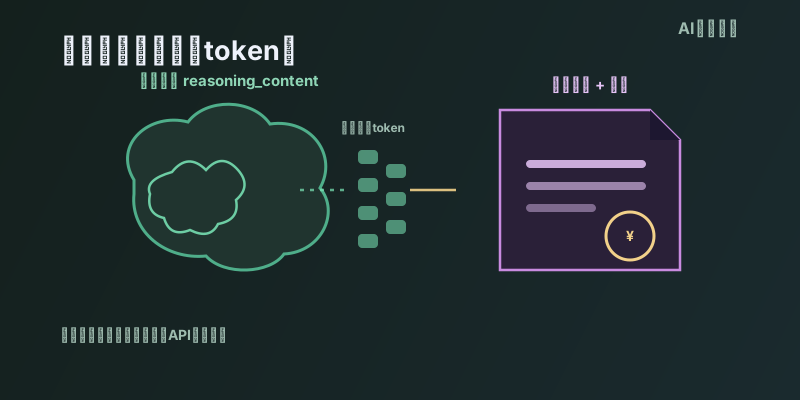
DeepSeek-R1 emits a reasoning_content chain-of-thought before the final answer; whether it's billed, at what rate, and how reasoning_tokens vs completion_tokens show up on your bill — and why estimating cost from the final answer alone falls short.
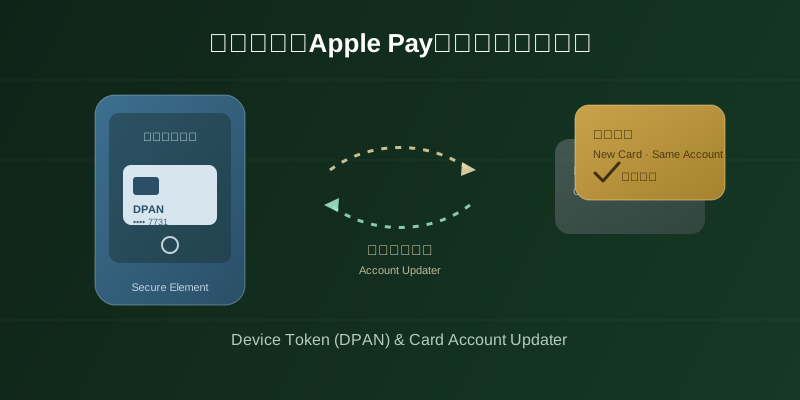
Apple Pay/Google Pay charge a device-specific DPAN token instead of your real card number; when a bank reissues a physical card, the card network's Account Updater service typically syncs it automatically, though coverage varies by issuer.
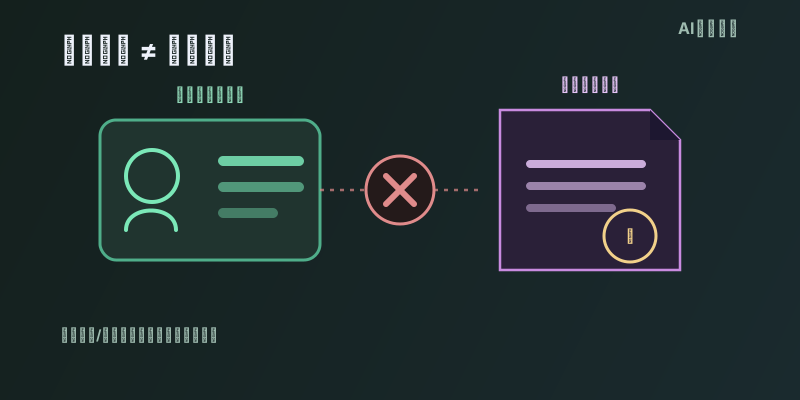
A DeepSeek or Qwen API account verified with a personal ID can block a company invoice later: verified identity and invoice payee are bound together, and personal accounts often can't issue enterprise invoices.
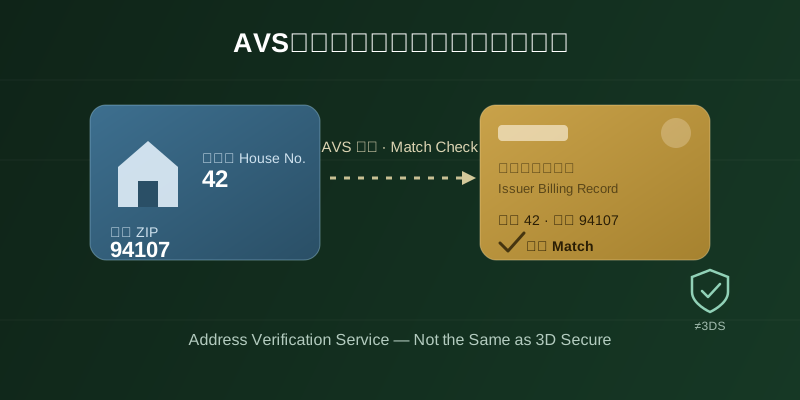
AVS checks match only the house number and ZIP of your billing address against your card issuer's record, unlike 3D Secure identity checks; a mismatch can still decline a charge.
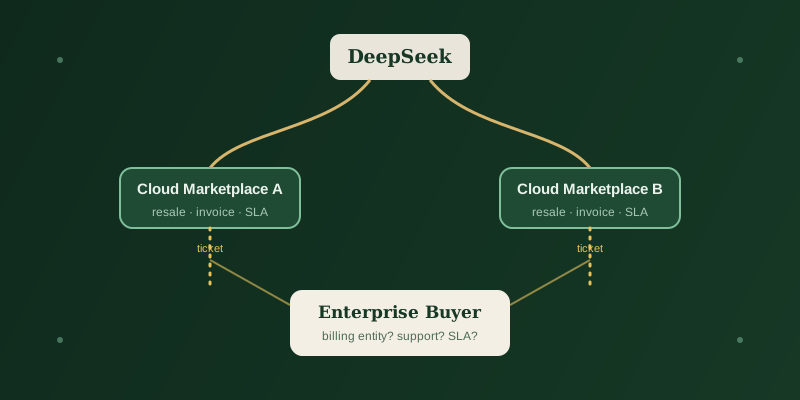
Buying DeepSeek or Qwen through Aliyun or Tencent Cloud resale can differ from a direct vendor deal on billing entity, support channel, pricing, and SLA terms — verify each before signing.
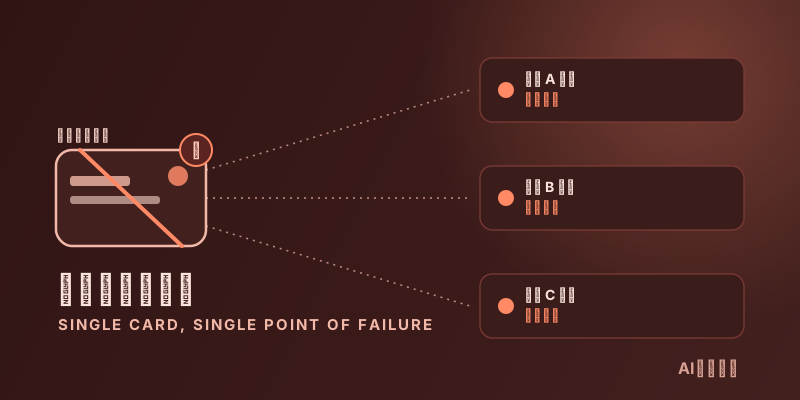
One card for several AI subscriptions is tidy for billing, but it's a single point of failure: a card tied to many merchants' recurring charges is itself a risk signal.
Generative AI filing doesn't cover level protection assessment, a separate Cybersecurity Law regime for system security, not whether generated content itself is compliant.
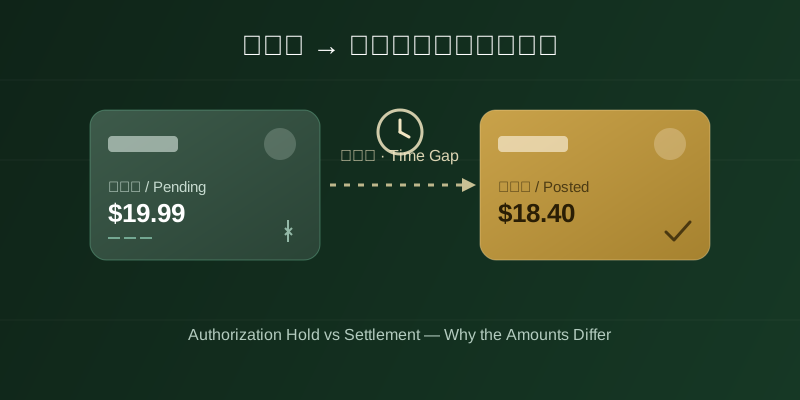
An AI subscription bill can show a pending hold, then a separate posted charge for a different amount — authorization and settlement are two separate stages in payment processing.
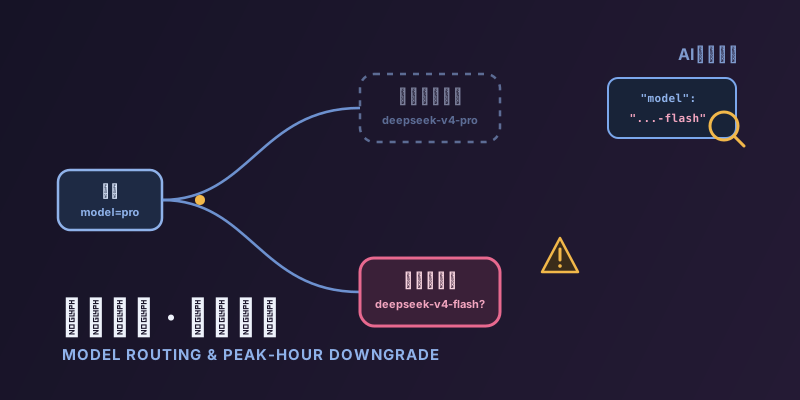
At peak hours the model behind a DeepSeek or Ernie Bot call may quietly differ from what you asked for — check the model field, retest across hours, verify SLA clauses.
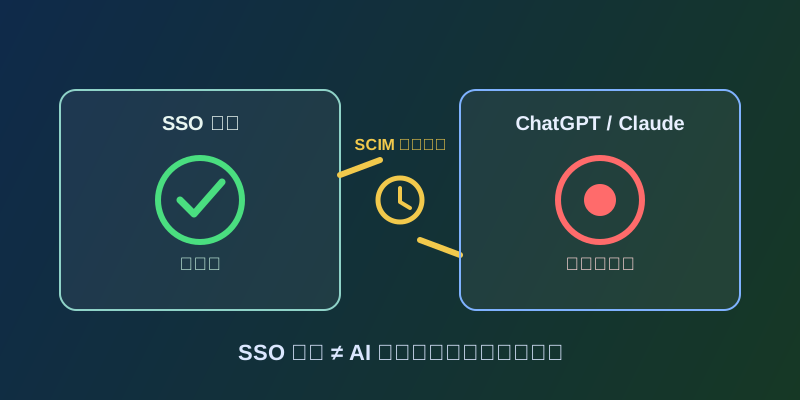
Disabling SSO on offboarding day doesn't guarantee ChatGPT or Claude access is revoked instantly — tier SCIM support, sync delay, and live sessions can all lag behind.
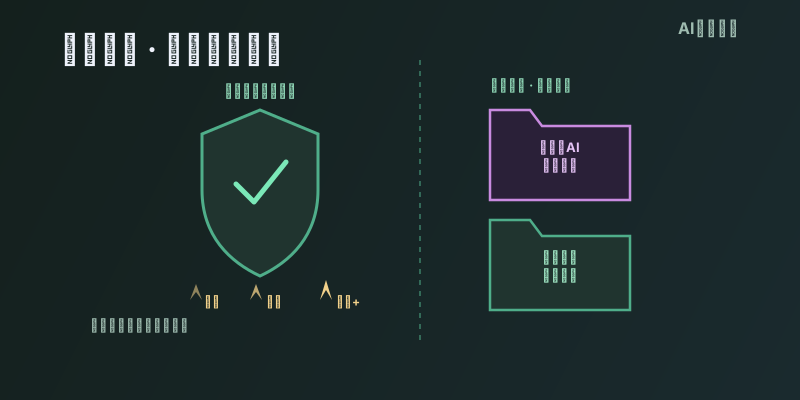
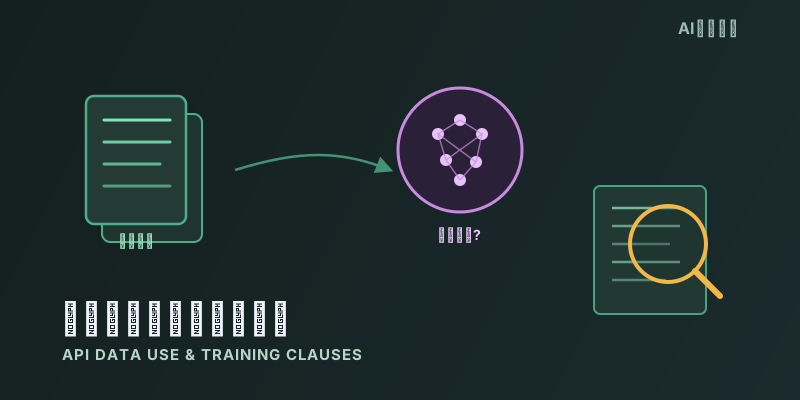
Enterprises calling DeepSeek or Qwen APIs on business data want to know if inputs train the model; the answer is in provider terms, and free vs paid tiers can differ.
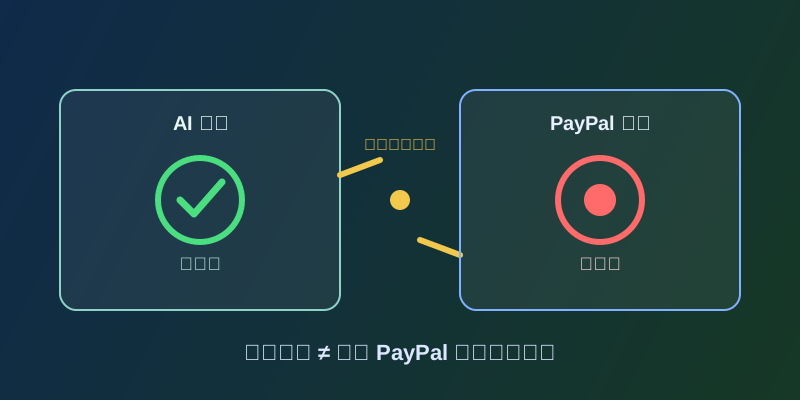
AI subscriptions often bill via a PayPal Billing Agreement, an authorization record kept separate from the platform's own status — cancel in-app without syncing PayPal, and the agreement stays active.
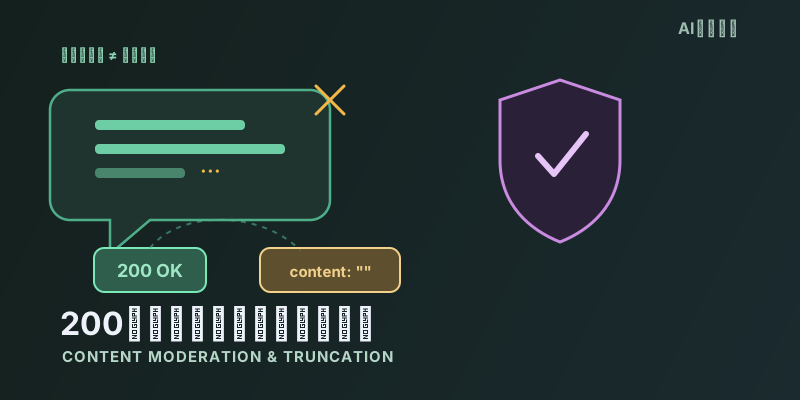
A DeepSeek or Qwen API call can return 200 OK with empty or truncated content — moderation, not a bug. Which field to check, and how it differs by vendor.
AI renewals should skip 3D Secure as merchant-initiated transactions under PSD2, but the exemption often fails silently when the MIT flag isn't passed correctly or the issuer challenges anyway.
Calling DeepSeek or Doubao's API doesn't meet China's generative AI filing rule beyond ICP registration — the vendor filing for its own platform doesn't cover your downstream product.
Cursor, Copilot, and Windsurf cap plans by premium requests. Simple completions cost little, but agent mode bills each file read, test, or edit step on its own, draining a month's quota fast.
DeepSeek and other Chinese model APIs charge double at Beijing daytime peak hours, routing batch jobs and fine-tuning to idle overnight capacity — enterprise verification is a separate matter.
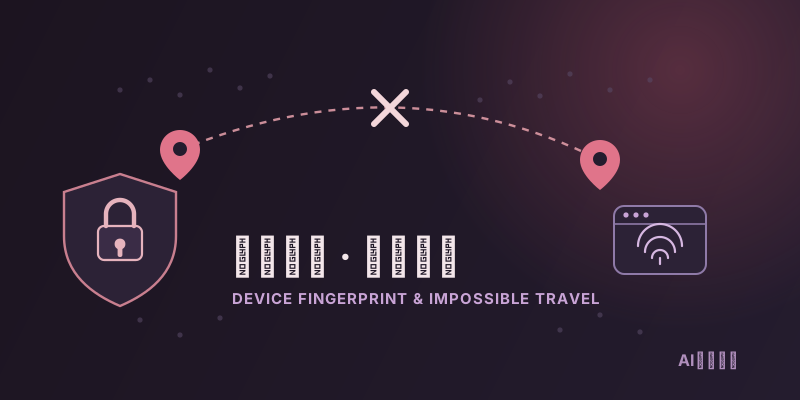
Hotel Wi-Fi on a trip, a new VPN node, and suddenly your correct password isn't enough — login risk detection flagging device fingerprint changes, IP geolocation jumps, and odd login timing.
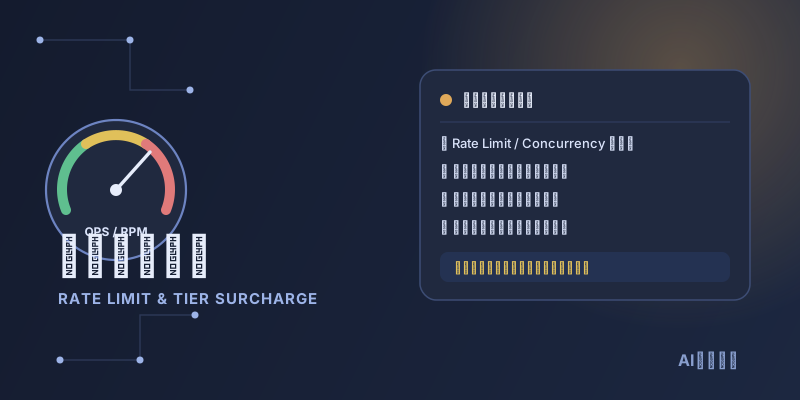
Beyond per-token pricing, bills can carry a separate concurrency/rate-limit tier surcharge, burst traffic billed at pricier on-demand rates instead of provisioned throughput, and batch-only discounts.
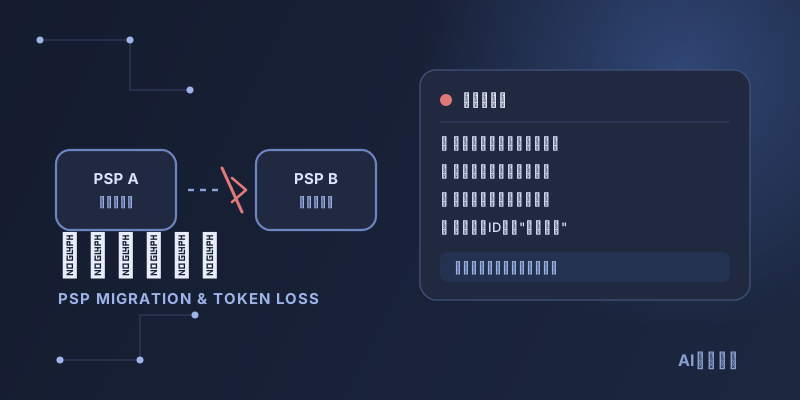
AI providers quietly swap payment processors, and the card token on file may not carry over — a vaguer decline email, a changed billing name, or a decline despite balance are the signs to check.
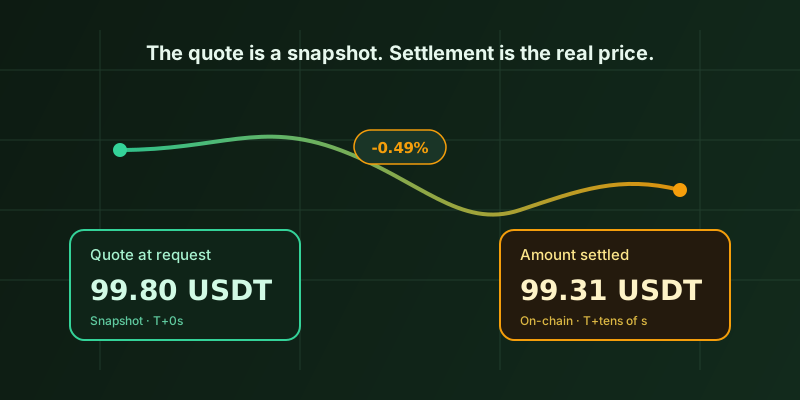
A swap quote is a snapshot at request time — settlement runs later against a moving market-maker price, and this breaks down exactly where the gap between the two comes from.
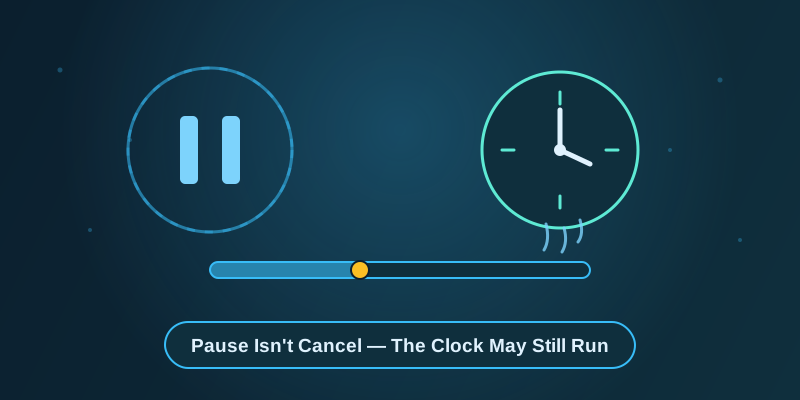
Pause looks gentler than cancel, but whether the renewal clock freezes, how much data survives, and whether locked-in pricing is voided often work nothing like cancel or downgrade.
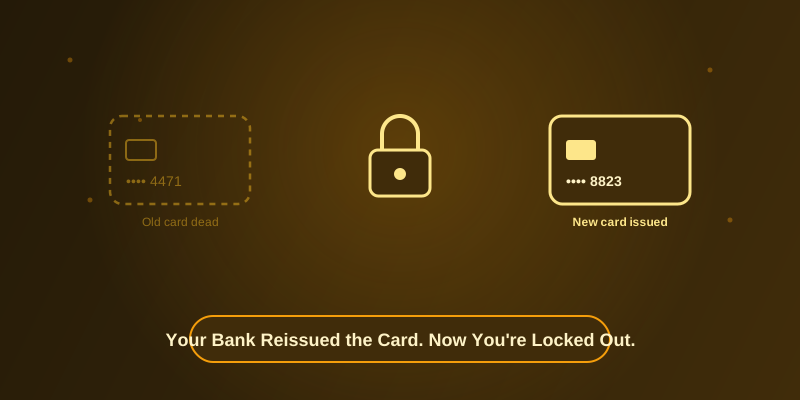
A bank-side bulk card reissue that the AI platform's account updater never caught fails silently, and when the grace period ends it triggers a security lockout, not a downgrade.
A promo code is bound to a fixed number of billing cycles, not the plan — when it lapses, price quietly reverts to full with no separate alert, just an ordinary renewal receipt.
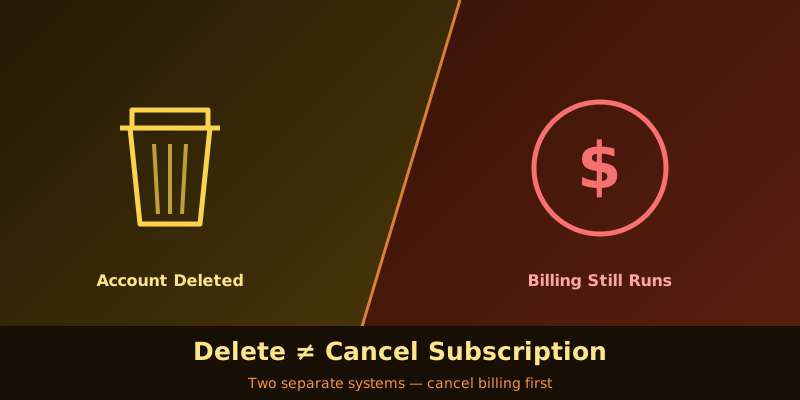
Many AI platforms treat account deletion and subscription cancellation as two unrelated buttons — deletion clears login and data, billing runs on separately until you cancel it.
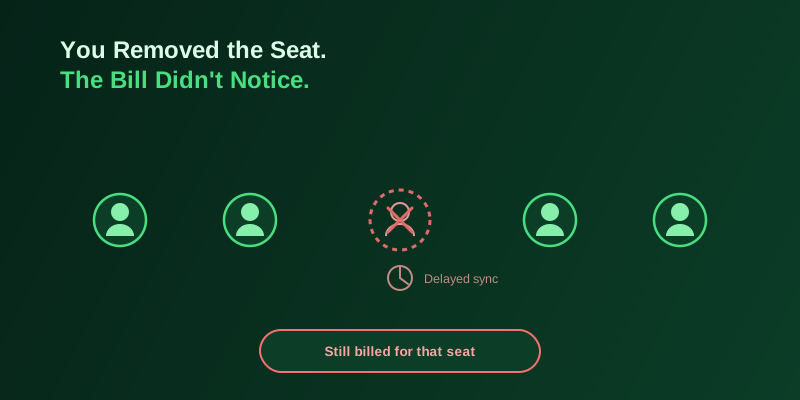
Removing a seat from a team AI plan rarely lowers the bill right away. Most platforms lock the seat count until the next billing cycle, so you keep paying for a headcount that no longer exists.
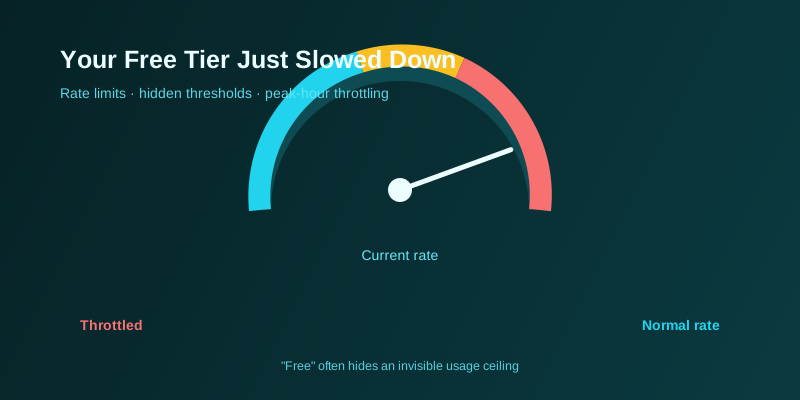
A free-tier usage cap isn't fixed — platforms flex it against real-time compute cost and load. Here's how the throttling engine actually works and what to do as your limit shrinks.
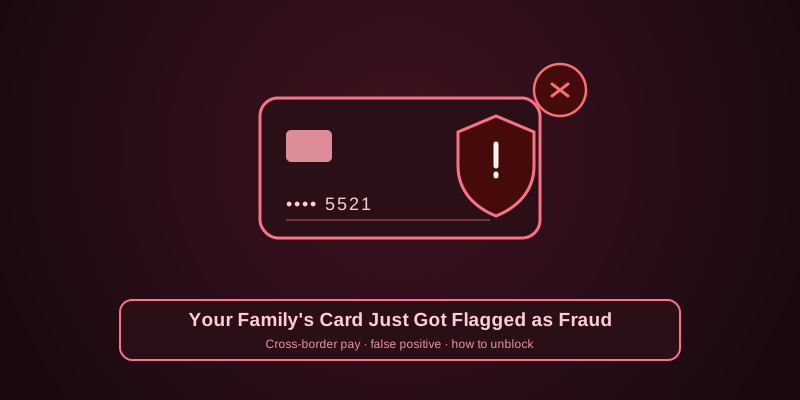
A mismatched name, address, or login location can trip an AI platform's fraud engine into blocking a real renewal — the scoring logic and how to appeal it.
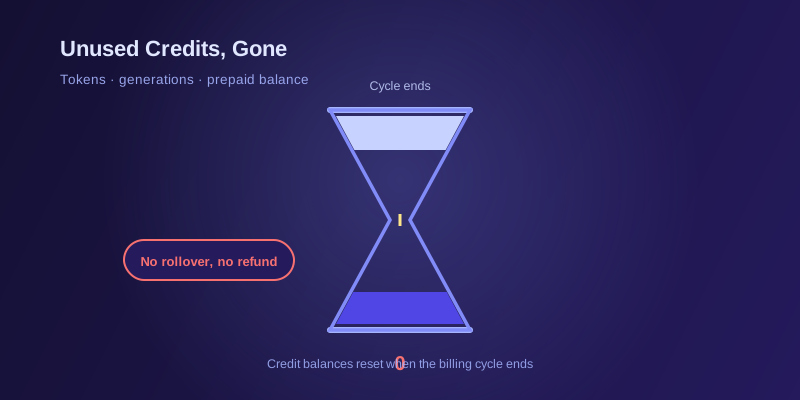
Unused API tokens and generation credits reset to zero each cycle, and closing an account forfeits prepaid balance too — why platforms design it this way.
A pre-checked upsell, a trial-to-paid default, or one casual line to support can quietly flip a monthly AI plan to annual billing without clear consent.
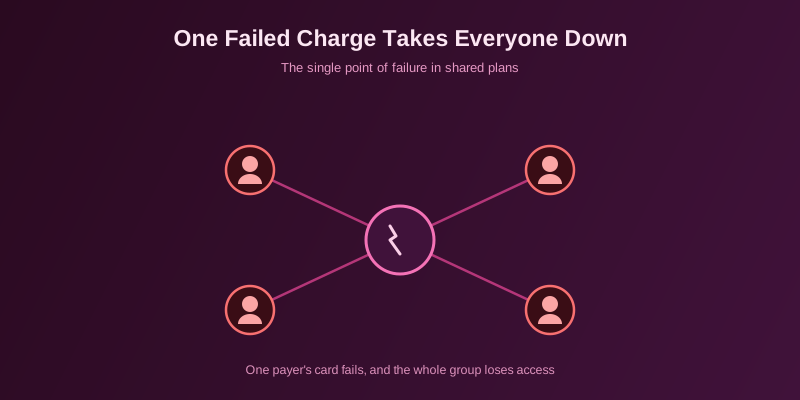
In a shared or family AI plan, only the owner's card is on file. When it fails and no one updates it, every member loses access the same day.
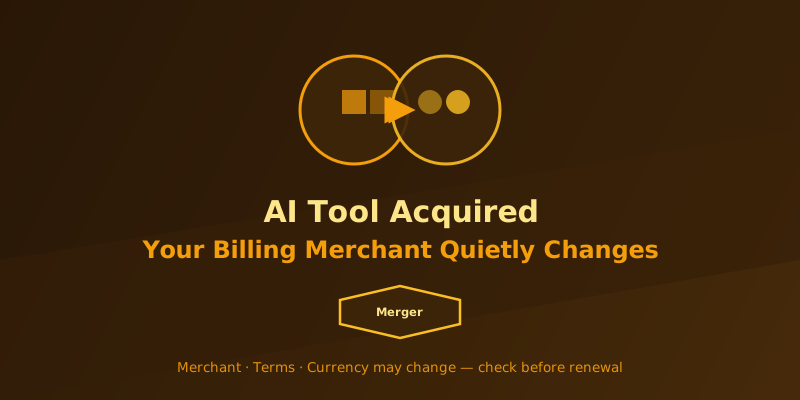
When an AI tool gets acquired, its billing entity, currency, and terms can change overnight, and your card issuer may flag the new merchant as fraud.
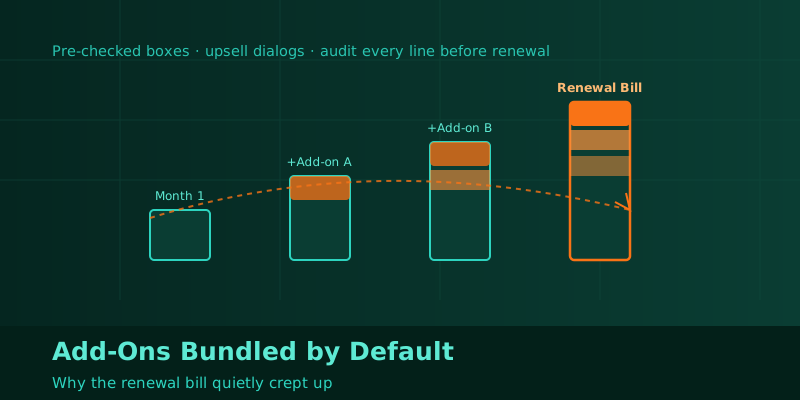
AI subscription renewals often bundle paid add-ons like storage or usage credits into checkout, quietly inflating your bill unless you check every line first.
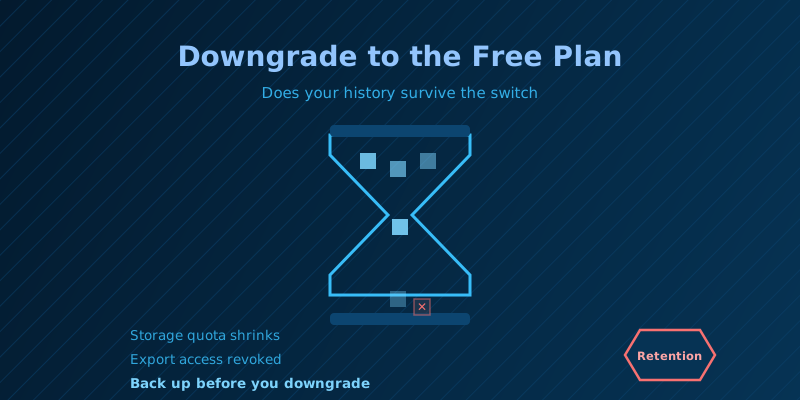
Downgrade a paid AI plan to free, and retention limits kick in quietly: chat history, projects and exports get purged after a grace period unless you act first.
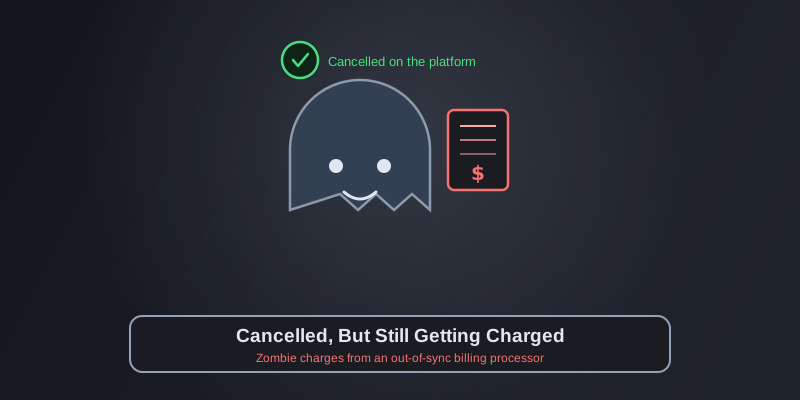
Cancelled an AI subscription but still got billed? Zombie charges often mean cancellation never reached the real processor. How to verify it and stop them.
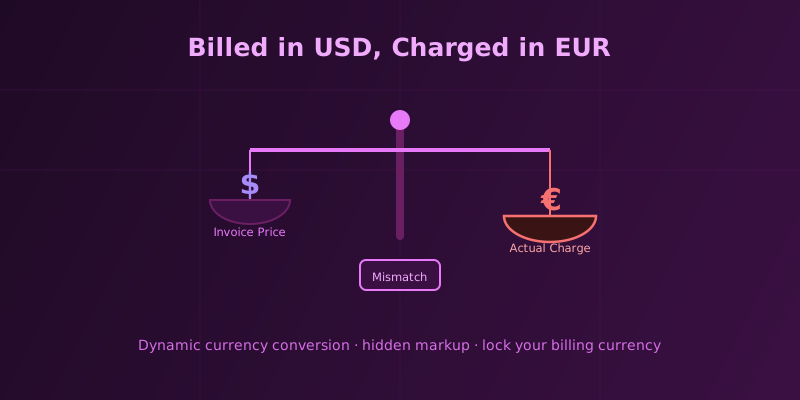
AI bills say USD but your card gets charged in EUR or GBP? That swap can quietly add a hidden markup. Here is how to spot it and lock in one billing currency.
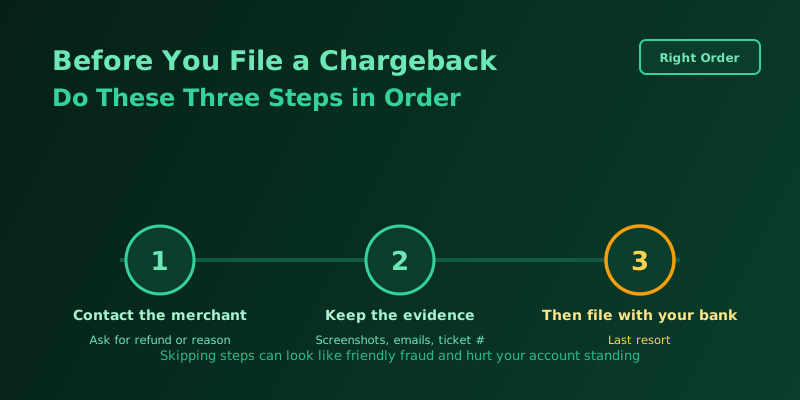
Filing a chargeback too soon can get your AI subscription banned before the refund lands. Contact support first, keep evidence, then dispute if it fails.
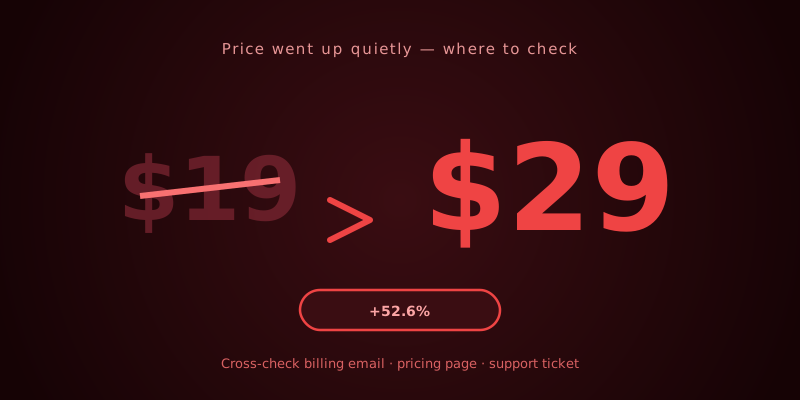
AI subscriptions rarely announce a price hike; the new rate appears on the next charge. Here's how to catch it early with a virtual card and stablecoin funding.
Small AI startups shut down or get acquired often. Learn the warning signs, what refund rights you have, and how a virtual card limits the fallout.
Free AI trials default to auto-renewal, not cancellation. This piece covers trial dark patterns, why renewal dates slip, and how a virtual card caps the risk.
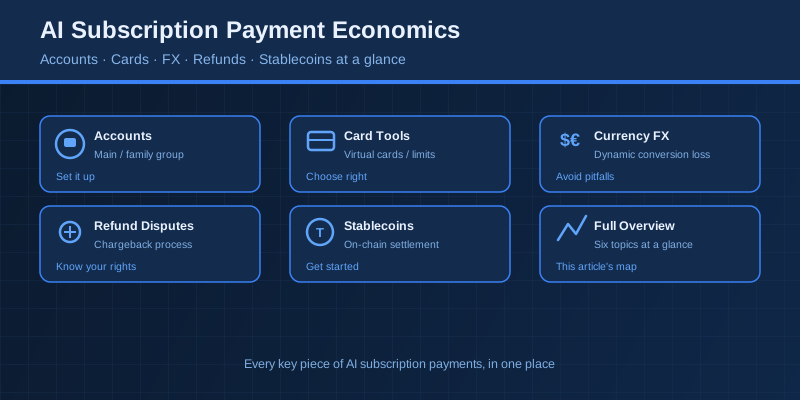
Account structure, FX markups, and failed charges shape AI subscription payment economics. How to split accounts, and consolidate billing with one virtual card.
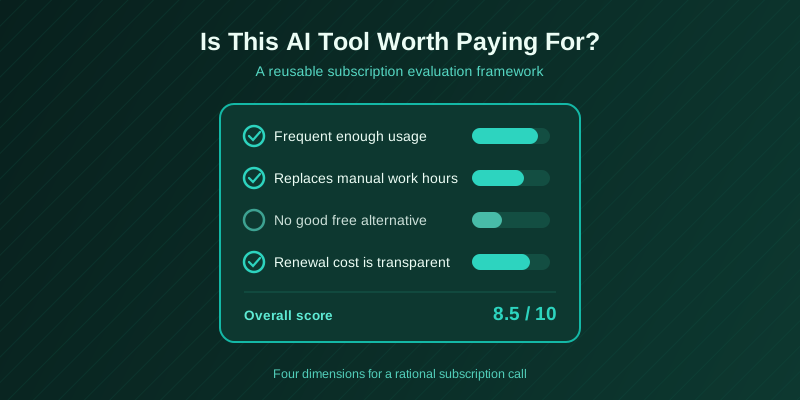
Feature tables and benchmarks rarely predict what you'll still use. A framework built on embedding cost, choice overload, and a 90-day retention check.
What really moves productivity is not one hit app but the rebuild of AI use cases and workflows: solo vs team scenarios, real wins, hype, and payment hurdles.
Subscribed to several AI tools but cannot total the cost, with no card for overseas billing? Estimate the spend, then open, fund, and bind one virtual card.
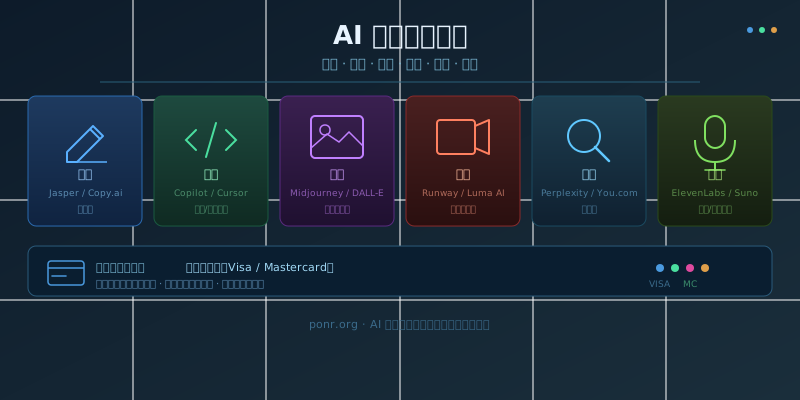
From writing and coding to image, video, search and voice — a horizontal map of the six major AI use cases, their representative tools, real pricing structures, and how to pay for all of them with one virtual card.
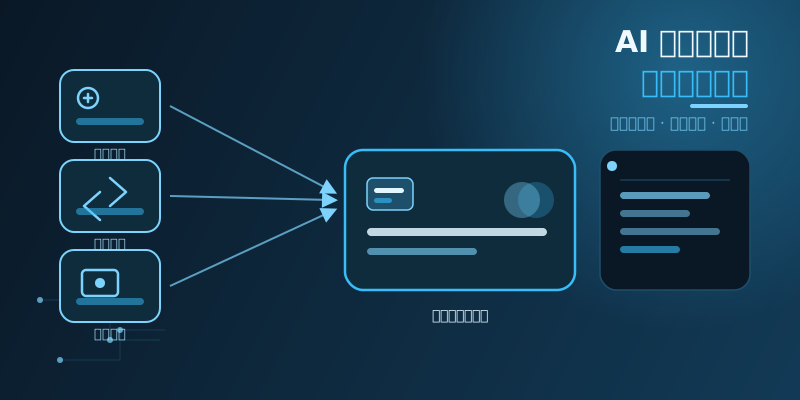
Juggling AI subscriptions with charges you can't track? Compare tools by real use case, then use one virtual card to fold every AI bill into a single statement.
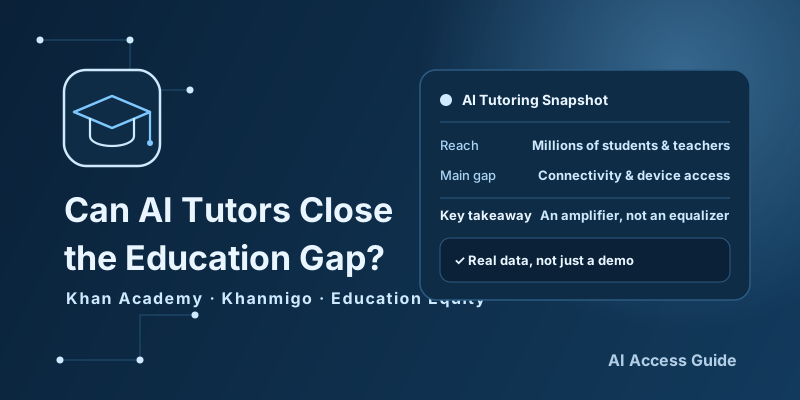
Khan Academy's Khanmigo reaches millions of students. This piece examines the real data on AI tutoring outcomes, and where access barriers still block equity.
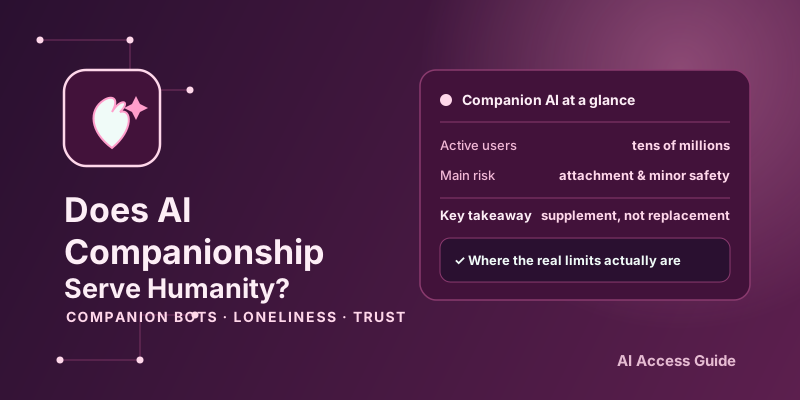
AI companion apps have tens of millions of users seeking connection. This piece examines what support they provide, and where safety risks stay unresolved.
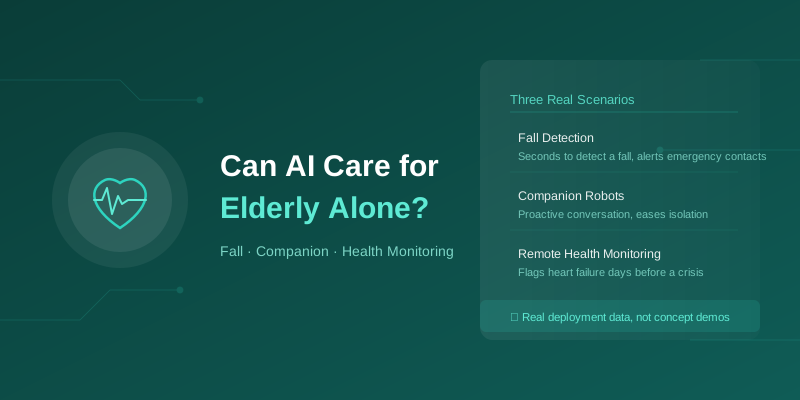
Can AI care for elderly people living alone? Fall sensors, companion robots and health monitors show real progress, and where eldercare AI still falls short.
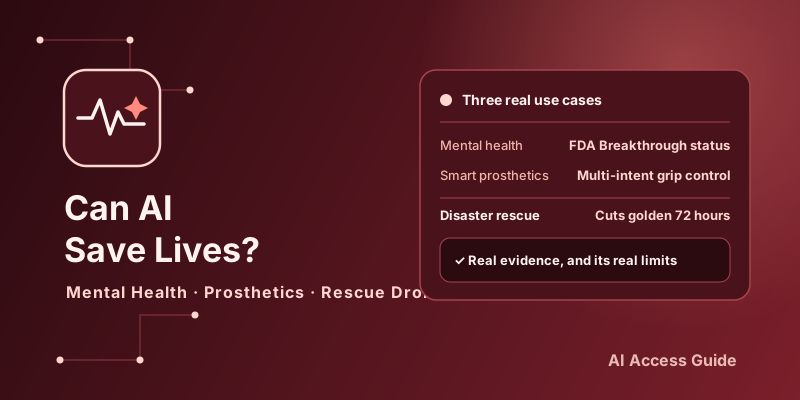
Can AI save lives? FDA-backed mental health bots, grip-restoring prosthetics, and rescue drones show real evidence AI helps, plus where it still falls short.
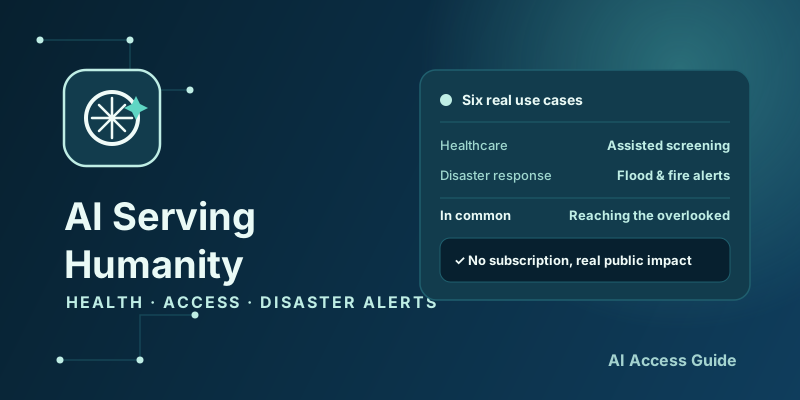
Beyond productivity hype, AI already helps doctors catch disease earlier, captions speech for deaf users, and powers flood and wildfire warning systems.
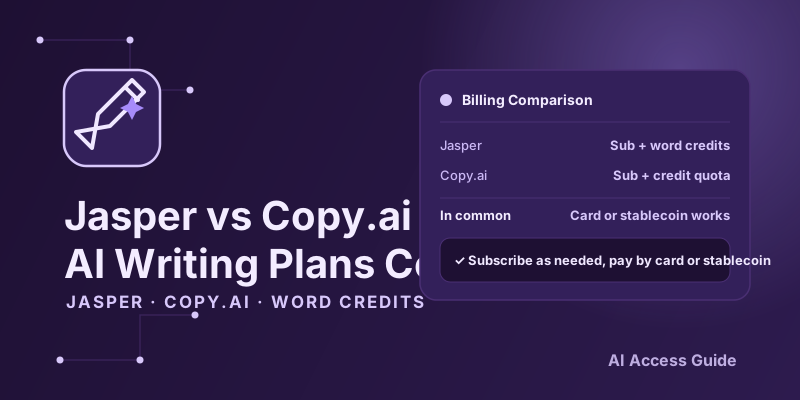
Jasper AI and Copy.ai bill AI writing through different word and generation credit systems. Compare plans, estimate cost, and pay both with a virtual card.
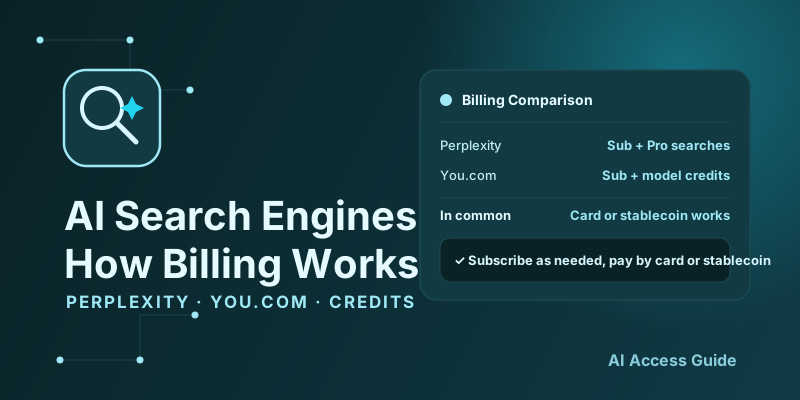
Perplexity and You.com sell AI search with different credit and query caps. Compare plans, estimate real cost, and pay both with a virtual card or stablecoins.
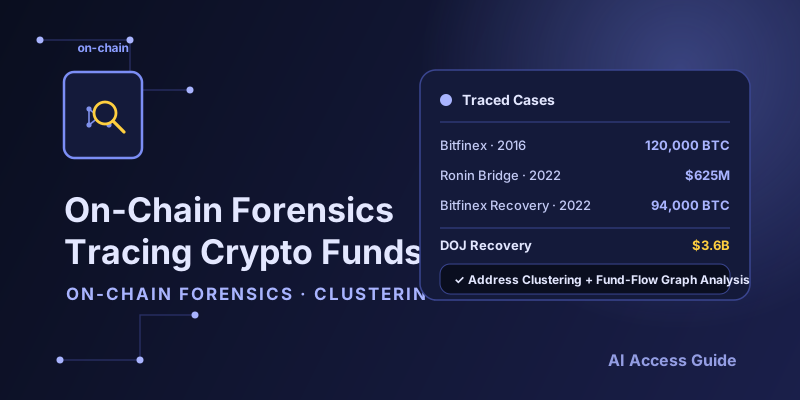
Crypto transfers leave a permanent trace. Forensics firms trace illicit funds via address clustering and fund-flow graphs — what that means for your privacy.
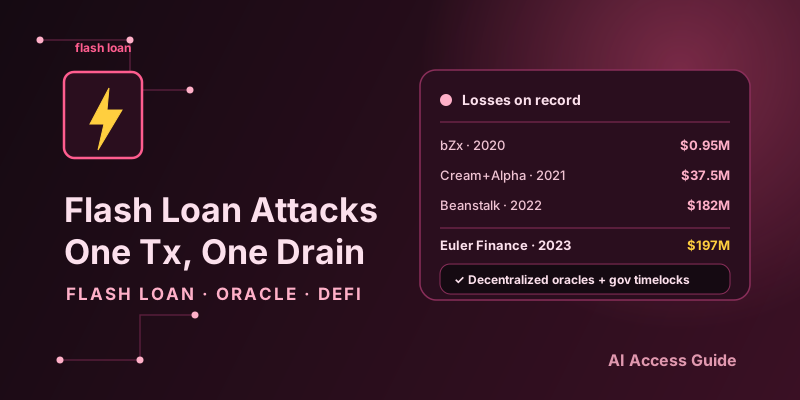
Flash loans need no collateral if repaid within one transaction. From bZx to Euler Finance, how attackers manipulate prices, hijack votes, and drain millions.
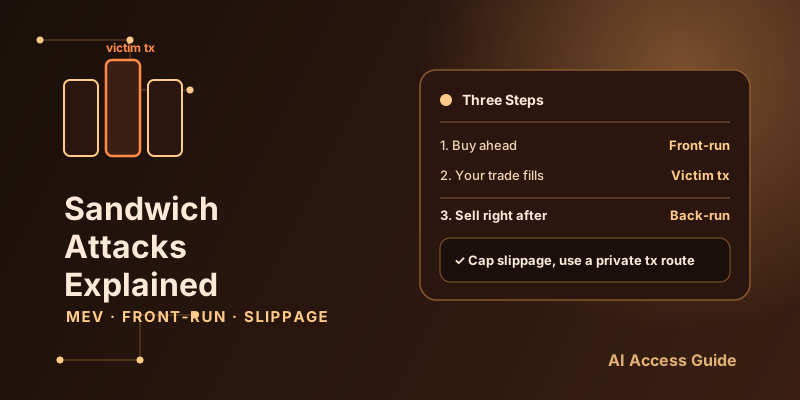
MEV bots pull hundreds of millions a year via front-running and sandwich attacks. How they work, who runs them, and how to protect your trades from slippage.
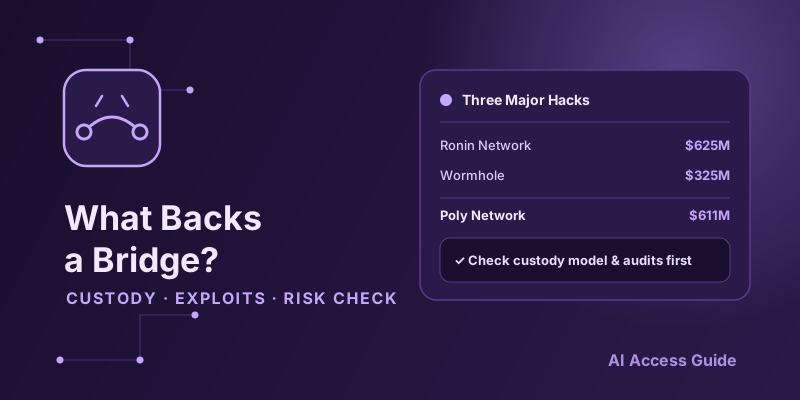
Cross-chain bridges have lost billions to hacks: Ronin, Wormhole, Poly Network. A breakdown of custody models, what failed, and how to check risk pre-bridge.
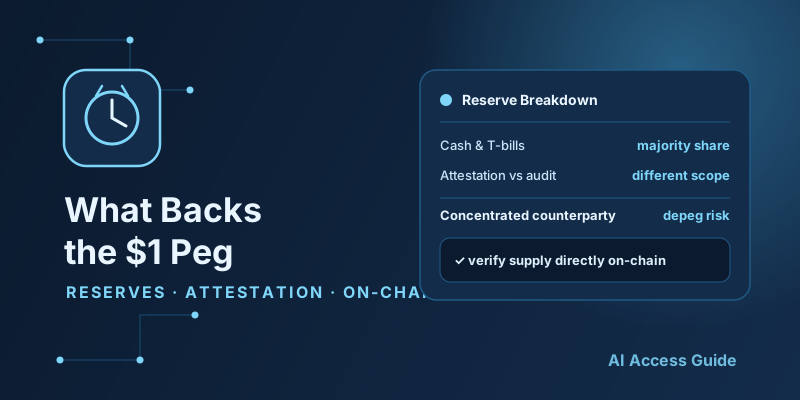
USDT and USDC claim a 1:1 dollar peg. A breakdown of reserve composition, attestation vs audit, and how to self-verify on-chain.
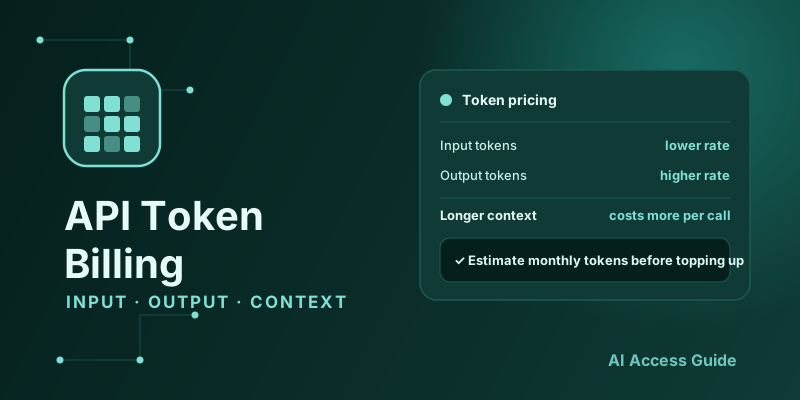
Calling AI model APIs bills per token, with input and output priced differently. Learn how tokens work, why long context costs more, and how to estimate spend.
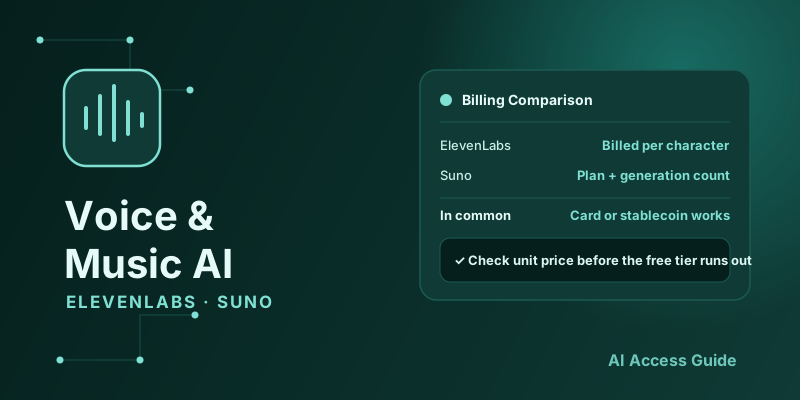
ElevenLabs bills by character count, Suno by subscription plus generations. Compare tiers, avoid pitfalls, and pay for both with the same stablecoin setup.
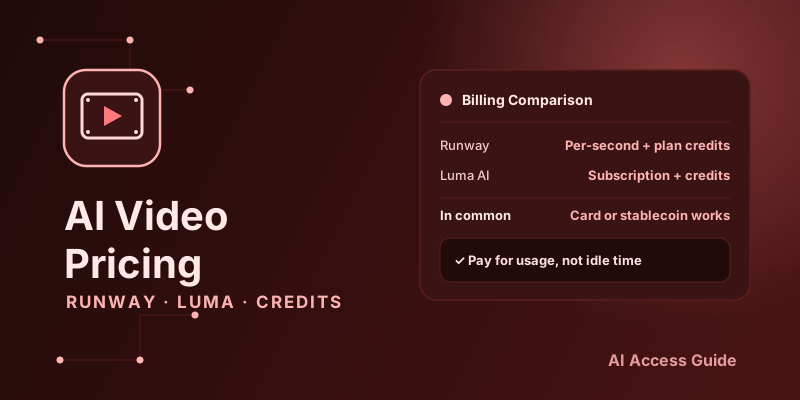
Runway and Luma AI bill by compute credits, but units and tiers differ. Compare plans, estimate real costs, and pay both with the same stablecoin setup.
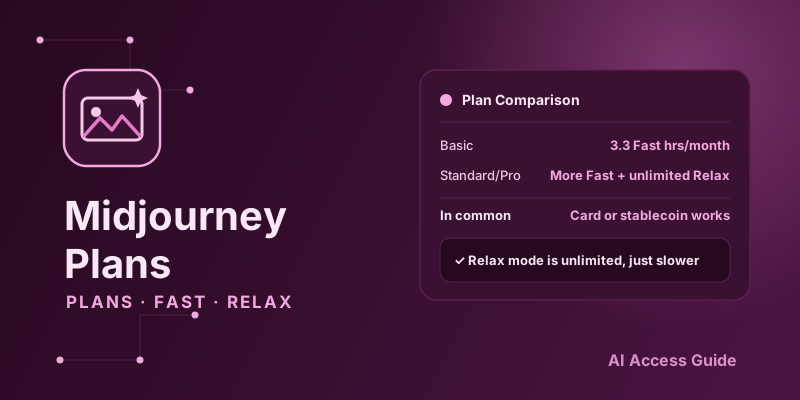
Midjourney splits into four tiers with different Fast and Relax GPU-time limits. Compare plans, dodge overage surprises, pay with stablecoin or a virtual card.
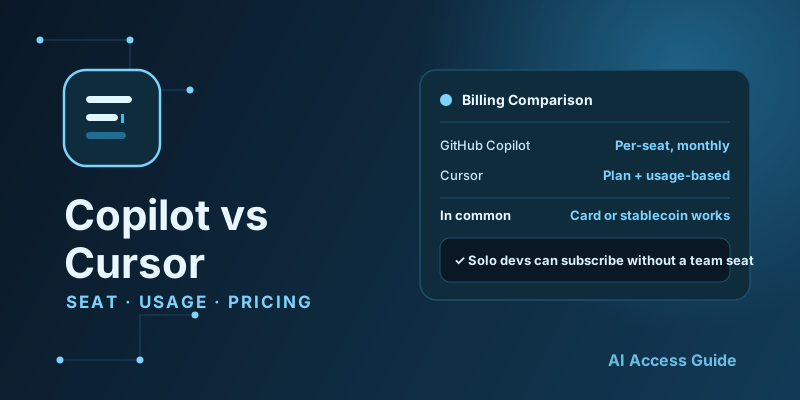
Copilot bills per seat; Cursor bills plan plus usage. Compare both for solo devs and teams, dodge billing pitfalls, pay either with stablecoin or virtual card.
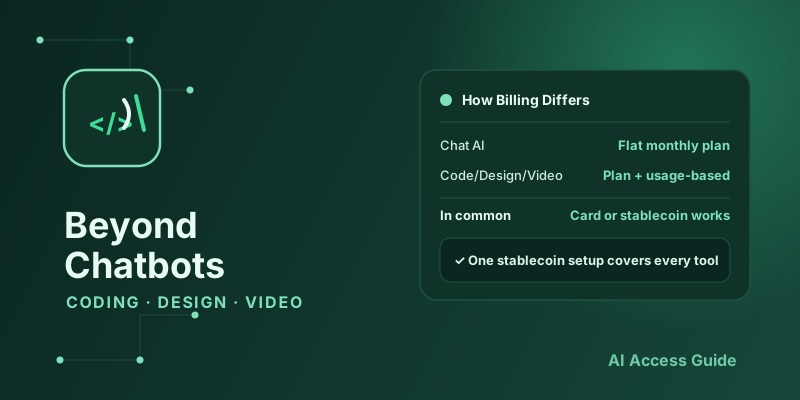
GitHub Copilot, Midjourney, and Runway bill the same way ChatGPT does — and one stablecoin setup can pay for all of them. Here is how to choose and sign up.
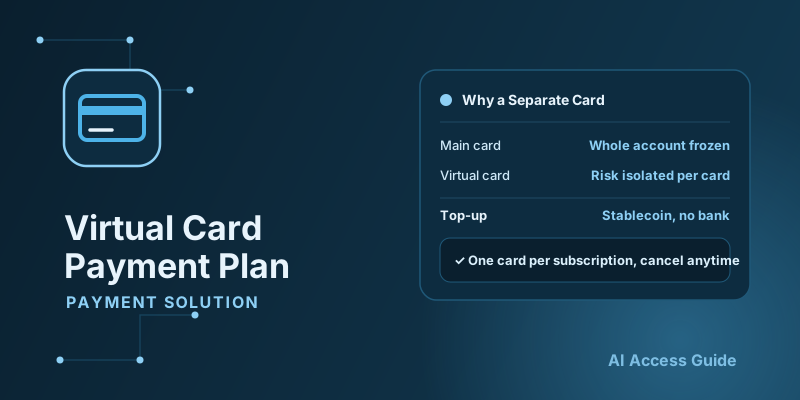
A standalone virtual card is a simple payment plan for overseas AI subscriptions: why you need one, how stablecoin top-ups work, and common pitfalls to avoid.
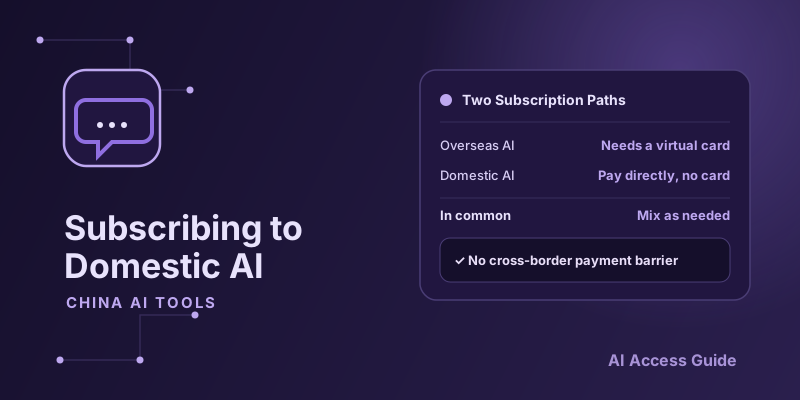
DeepSeek, Doubao, and Kimi can be paid for directly via Alipay or WeChat Pay — no virtual card needed. Here's how to choose one and get signed up.
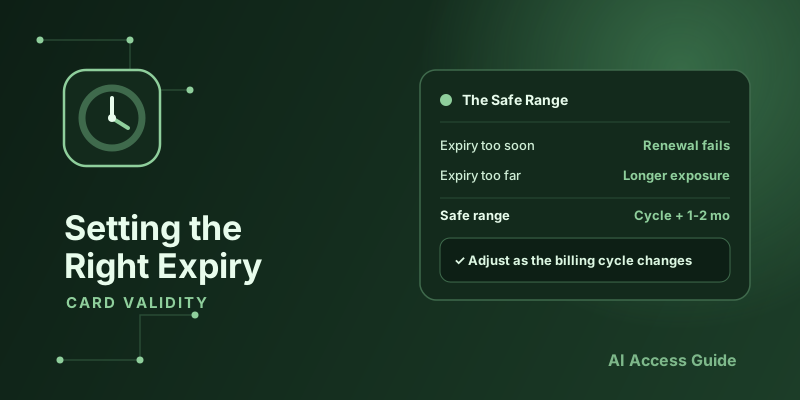
Too short and the card lapses before renewal; too long and an idle card stays exposed longer. How to size the expiry window right.
Card type, provider, limit, and allocation are separate decisions, easy to get wrong alone — one table distills them into scenario-based advice.
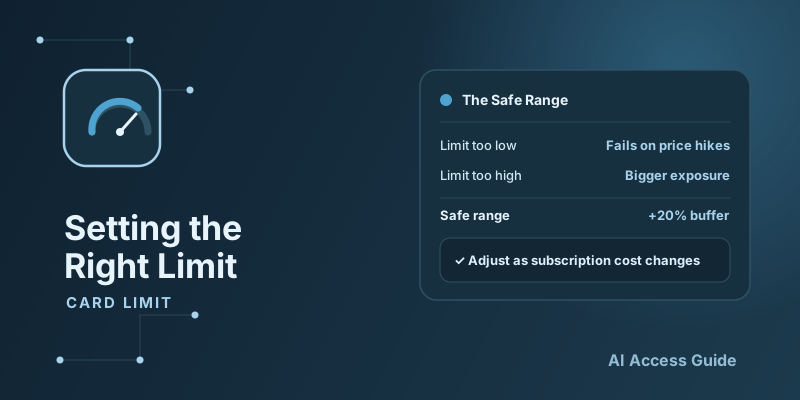
Too low and a price hike breaks renewal; too high and a breach costs more — how to find the safe range.
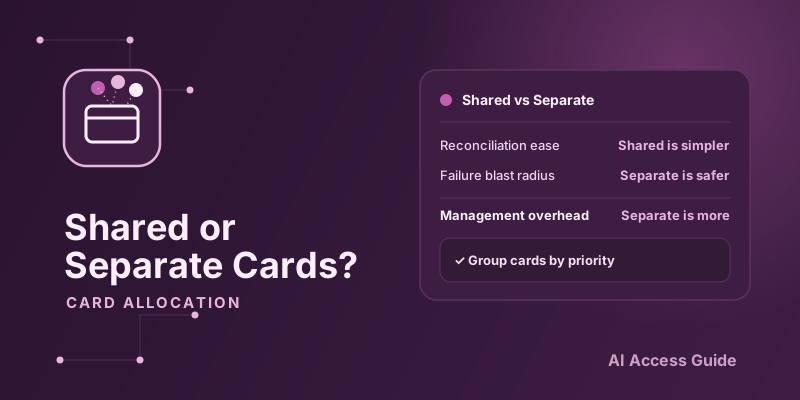
One card for every AI subscription is simple but risky; a card per subscription isolates failures but adds overhead. How to decide which setup fits you.
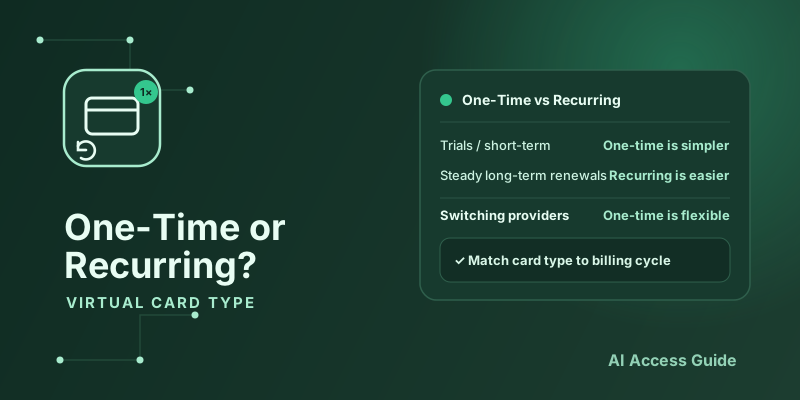
One-time virtual cards suit a single trial payment and disappear after use; recurring cards suit steady renewals. How to choose between them for AI subscribers.
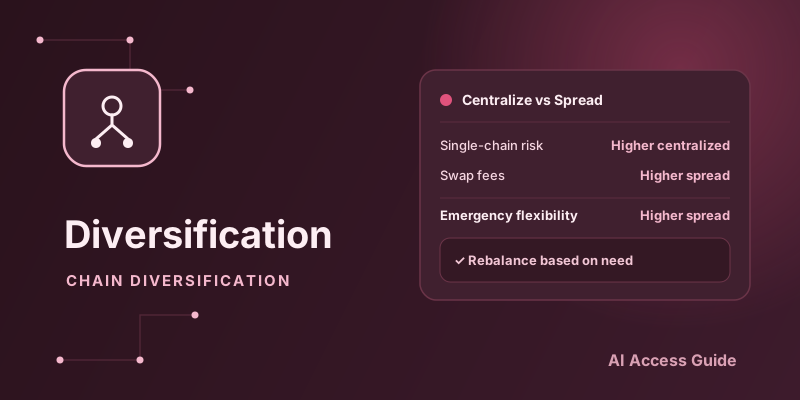
Splitting stablecoins across chains cuts risk but costs more in fees. How to decide between consolidating and diversifying your AI subscription reserves.
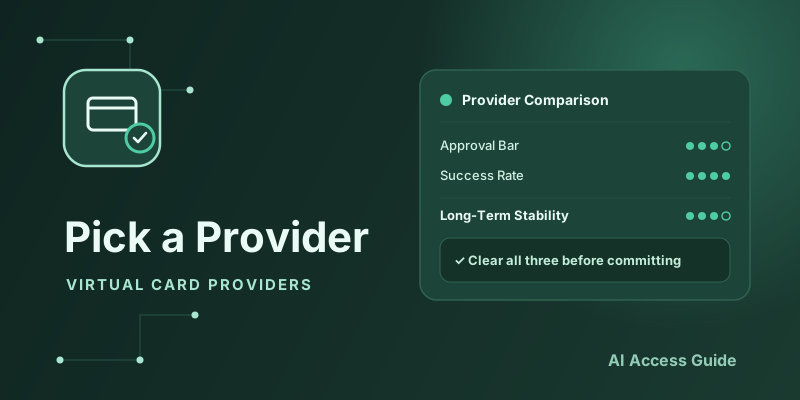
Not all virtual card providers are equal — approval requirements, success rates, and long-term stability vary widely. What to check before picking one.
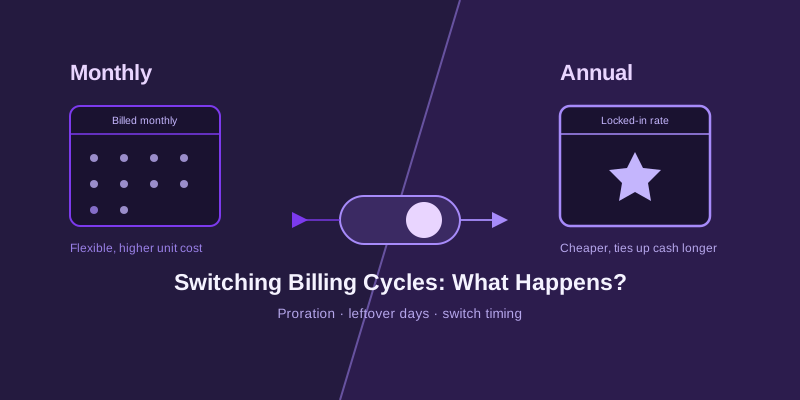
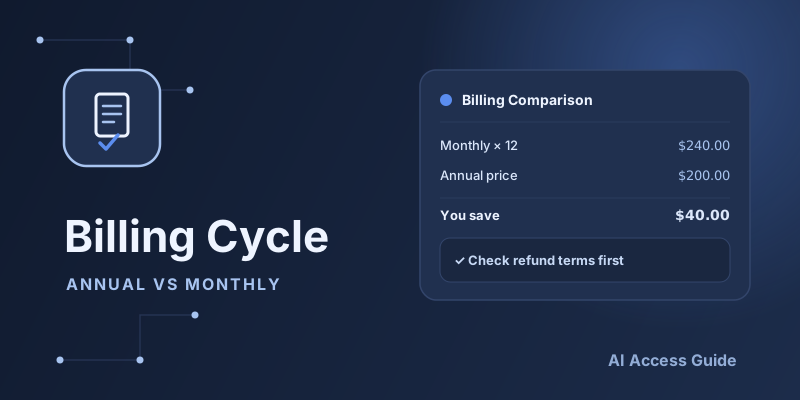
Annual billing saves money but locks you in; monthly costs more but stays flexible. Discount, refund terms, and how often needs change should decide which fits.
Stablecoin payments scatter small balances across chains — too little anywhere to renew with. How to inventory, consolidate, and avoid common mistakes.
A stablecoin payment stuck pending, confirmed but unrecognized, or failed — each needs a different fix. Check the transaction hash, then follow this order.
Holding the wrong chain's stablecoin is a common reason payments get stuck. What to check in a swap tool — quotes, fees, settlement speed, and custody.
Payments, network, and account tools for overseas AI subscriptions keep multiplying. How to tell if a tool is reliable, and why hands-on reviews beat marketing.
Sent a stablecoin to the wrong chain? What actually happens to your funds, what to check first, common mix-ups, and how to recover and consolidate assets.
Balance is there but your card still got declined? AVS mismatches, failed 3DS checks, flagged card ranges, and limit issues — the four causes and fixes.
Plan ahead instead of scrambling after a failed renewal: how much reserve to keep, what form to hold it in, picking the right chain, and consolidating assets.
Splitting ChatGPT Plus or Claude Pro across a household? How family plans differ from team plans, who pays, and what happens when someone leaves.
Need to expense a ChatGPT Plus or Claude subscription? Getting official receipts, backing up card or stablecoin payments, and avoiding finance rejections.
ChatGPT Plus, Gemini, and Perplexity offer student discounts, but verification often stalls. Education-email and third-party verification paths, explained.
Cards, virtual cards, and stablecoins can leave very different amounts leaving your pocket. Currency conversion traps, FX fees, and network costs explained.
How to cancel, downgrade, or get a refund on ChatGPT, Claude, or Gemini — official policies, refund timing, and how card and stablecoin refunds differ.
How to secure your ChatGPT, Claude, or Gemini account: two-factor auth, password hygiene, team permission limits, and recovering a restricted account.
ChatGPT or Claude renewal suddenly failed? How to diagnose the cause, two recovery paths, and how to top up funds fast with crypto you already hold.
Before subscribing to ChatGPT, Claude, or Gemini, check your connection stability and billing-region consistency to avoid failed sign-ups and re-verification.
A practical guide to stablecoin payments: why USDT/USDC work, picking the right chain, bridging scattered assets into the coin you need, and avoiding mistakes.
How to pick a reliable virtual card for ChatGPT or Claude, fund it with USDT, pass AVS and 3DS checks, and keep auto-renewal running long-term.
A practical guide for teams juggling multiple AI subscriptions: seat planning, renewal stability, funding, and reconciliation, avoiding unused seats.
A side-by-side comparison of cards, virtual cards, and stablecoins for AI subscriptions — cost, success rate, address matching, and renewal reliability.
A full rundown of ChatGPT, Claude, Gemini, Perplexity, Midjourney, and Grok plans, regional availability, and sign-up steps for restricted regions.