
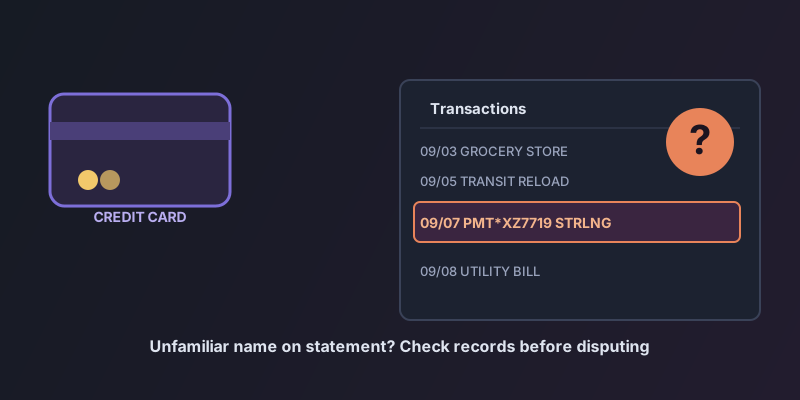
Verification Checklist
- ✓When an unfamiliar name shows up on your statement, did you first log into the AI service's account dashboard to check the subscription and charge history, instead of calling the bank right away
- ✓Did you keep the confirmation email or receipt from when you first subscribed (amount, billing cycle, and sometimes the actual descriptor name) so you can cross-check unfamiliar entries later
- ✓Before filing a dispute, did you confirm the charge really wasn't authorized by you or a family member, rather than concluding that from an unfamiliar name alone
- ✓Before submitting a formal chargeback, did you try contacting the AI provider's support team first to explain the situation and ask about a refund or cancellation as an alternative
- ✓If the account has already been flagged or suspended over a chargeback, did you check that provider's own appeal/reinstatement instructions right away, instead of waiting it out or just creating a new account
1. A statement name that doesn't match the product is a normal payment-processing quirk, not a scam
The name that appears on a credit card statement is technically called the "merchant descriptor," and it's set by the acquiring bank, the payment gateway, or the merchant itself on the backend — there's no requirement that it match the consumer-facing brand name at all. The payment chain behind overseas AI subscriptions is often more layered than it looks: some route billing through a payment processor like Stripe, so the statement shows a gateway-related string; others have gone through a rebrand, a parent-company restructuring, or operate under a different legal entity in different regions, so the statement may show a former name or a registered corporate entity rather than the brand the consumer actually recognizes. Visa's own merchant name/descriptor standards documentation acknowledges this directly, noting that a merchant name that's perfectly clear on-site can confuse a cardholder when it shows up out of context on a statement. This is a known quirk of how the payment industry's plumbing is built — it doesn't, by itself, mean the charge is wrong or fraudulent.
2. Filing a chargeback over a misread name effectively self-reports your account as fraudulent
The real risk isn't the confusing name itself — it's what the cardholder does next. The common instinct is to call the card issuer and say "I don't recognize this charge, I want to dispute it." Once the bank processes that as a cardholder-not-recognized or fraud-type dispute, it runs through the card network's formal chargeback process and the money gets clawed back. But from the AI provider's side, a transaction that comes back as a successful chargeback is typically routed straight into "fraud/abnormal account" handling, not treated as a simple voluntary cancellation — because a chargeback is, formally, the cardholder telling the bank "this charge was unauthorized," and the provider's fraud system generally can't tell whether that's a genuinely stolen card or just someone who forgot what they'd subscribed to and didn't recognize the billing name. Once that flag trips, the account is usually suspended outright, and the exact conditions for lifting a chargeback-related suspension — whether an appeal is even possible, and what documentation it requires — differ by provider and aren't standardized; check that provider's current official policy rather than assuming one rule applies everywhere.
3. What to do before and after subscribing: keep records, check first, call the bank last
The preparation you can do ahead of time is concrete: save the confirmation email or receipt the provider sends when a subscription starts — it usually states the charge amount and billing cycle, and sometimes even flags what the statement descriptor will actually read. When an unfamiliar name shows up later, the first move isn't calling the bank — it's logging into the AI service's own account dashboard to check whether the billing history there lines up with the amount and date on the statement. A quick web search for the exact descriptor string also helps; plenty of these strings have already been discussed by other cardholders who traced them back to a specific provider. If that check confirms it's your own subscription billing normally, there's no need to involve the bank at all. If, after checking, you still believe the charge wasn't authorized, that's when the formal dispute process makes sense — and even then, contacting the AI provider's support team first to explain the situation and ask for a refund or cancellation is a gentler path to try before filing a formal chargeback.
4. If a mistaken chargeback has already locked the account, reinstatement is usually slower than a normal cancellation
Once a chargeback has been filed and the account has already been flagged or suspended by the provider, recovery is typically more involved than a routine cancellation: it generally requires contacting support directly, explaining the situation, and providing evidence that the charge really was authorized by you (a subscription confirmation email, usage history), and some providers may also require the chargeback itself to be formally withdrawn through the card issuer before the account can be reinstated — a process that can involve both the card network and the issuing bank, and isn't something the provider alone can resolve on the spot. That's exactly why checking first, before disputing, is worth repeating: a few minutes spent cross-checking a subscription record is a much smaller cost than the layers involved in an appeal. How feasible reinstatement is, how long it takes, and what documentation is required varies by provider and how much each discloses publicly — when this happens, check that provider's help center at the time rather than assuming every platform handles it the same way.
5. Bottom line: an unfamiliar line item calls for a check, not a chargeback
An unfamiliar merchant name on an overseas AI subscription's statement is, in the overwhelming majority of cases, just a normal quirk of how payment processing works — not a sign of a stolen card. The right order of operations is: check your own subscription record and confirmation email first, then decide whether the bank needs to get involved at all. If the check confirms it's a normal recurring charge, there's no need to reach for the "nuclear option" of a chargeback. Skipping that check and disputing right away might get the money back, but the account getting flagged as fraudulent and the subscription suspended along with it is usually a much slower, messier problem to untangle than simply cancelling would have been in the first place.