
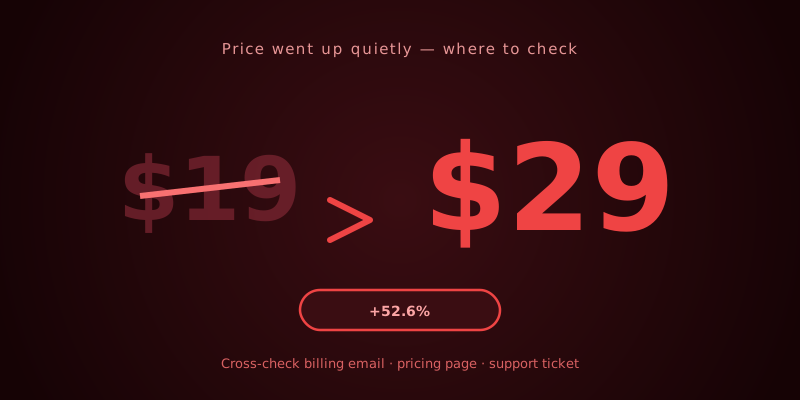
Verification Checklist
- ✓Open the itemized detail of a recent subscription charge and compare the exact number against the same charge from three to five months ago
- ✓Log into the subscription's dashboard and check whether the current usage cap, seat count, or compute allowance is lower than what you remember
- ✓If you're using a virtual card, check whether any charge this month was declined for exceeding the limit you set
- ✓Compare stablecoin top-up amounts against subscription charge amounts to confirm any gap isn't just FX movement
- ✓After confirming a hike, have you contacted support to ask about legacy pricing before cancelling?
1. Silent price increases are a design choice, not an oversight
Nearly every AI subscription's terms of service include some version of "we may adjust pricing at any time," and that clause is the legal basis for skipping a heads-up. Unlike cancellation, which requires the user to actively click something, a price change usually requires nothing from the user at all — if you don't cancel, the new price simply applies at the next renewal. Sending an "we're raising prices" email risks prompting some users to shop around or cancel, so silence is often the higher-converting default. This isn't one company's habit; it's the quiet norm across subscription businesses generally, and AI tools inherited it unchanged.
2. Three common ways a price increase actually lands
The most direct version is a straight sticker-price change — the pricing page quietly updates, but the renewal email template for existing subscribers stays on the old copy, so the new number only shows up if you open the actual charge detail. A second version is plan restructuring: the tier you know gets split in two, and the price point you're used to now covers a reduced allotment, with the old feature set moved to a pricier tier. The subtlest version keeps the dollar figure unchanged but quietly trims the usage cap, seat count, or compute allowance behind it — the charge looks identical, but the real cost per unit went up. None of the three trigger a proactive notice; the gap only shows up if you go looking for it.
3. Why the gap on your statement is so easy to miss
Credit card statements bundle a month's charges onto one page, and a single subscription line item rarely stands out enough to tell whether it's higher than last month. If the card bills in a foreign currency, exchange-rate movement alone shifts the local-currency total every cycle, and a genuine price increase of a few dollars gets buried in that noise. Add to that the fact most people only remember a subscription's cost as a rough range rather than an exact figure, and a small increase rarely registers — it usually takes several months of compounding before the total gap becomes obvious enough to notice.
4. A virtual card limit turns a hike into an automatic decline
This is where a virtual card beats a regular credit card for this specific problem. A regular card's limit is a large number set by the bank, and a merchant can charge anywhere under it without friction. A virtual card lets you set a monthly limit per subscription — just enough to cover the current price plus a small buffer. If a renewal charge comes in above that buffer because the price went up, the charge is declined outright, and you get a decline notification immediately instead of discovering the increase weeks later on a credit card statement. Providers like RDVCC, a US virtual credit card platform, let you open one card per subscription and adjust the limit from a dashboard — the decline itself becomes a free early-warning system for price changes.
5. Funding on demand keeps FX noise from masking a real hike
Separating "the price actually went up" from "the exchange rate moved" is easiest if you fund the virtual card with stablecoins on demand instead of letting a bank auto-convert a foreign-currency charge. Send USDT or USDC and the top-up amount is exactly what you sent, denominated the same way as the subscription charge, with no FX spread quietly blended in. If your stablecoins are spread across chains, a non-custodial swap like AllSwap can consolidate into the coin you need before funding — no signup required, and failed swaps refund automatically. The funding history itself becomes a clean reference for whether a subscription's price actually changed.
6. Found a hike? Ask support before you decide to leave
Once you've confirmed a charge really is higher, the first move isn't to cancel — it's a support ticket asking exactly what changed and whether legacy pricing applies to your account. Plenty of AI products quietly grandfather long-time subscribers into the old rate, but only if you ask; it's rarely advertised. If support confirms there's no room to negotiate, that's the point to compare current rates across similar tools and decide whether to keep paying, downgrade a tier, or switch to a comparable alternative. Working through this order avoids cancelling a tool that's still worth the new price out of a reflexive reaction to the higher number.
7. Where silent price increases hit hardest
A few categories deserve extra attention. Token- or compute-metered API services often announce rate changes buried in developer changelogs rather than anywhere a typical end user would see. Early-stage products that used low introductory pricing to grow a user base are prone to a meaningful correction once they've locked in demand. Team and multi-seat plans sometimes raise the per-seat rate only for new seats, leaving existing seats untouched — until any headcount change pushes the whole team onto the new number at once. Checking these categories' current published pricing quarterly, rather than annually, against your own last charge is worth the ten minutes it takes.
8. A five-minute monthly audit routine
Turn the above into something repeatable: first, pick one day a month to scan every subscription charge rather than waiting for a card statement to flag it. Second, keep a rough record of each subscription's last known price somewhere shared or easy to check. Third, fund virtual cards with stablecoins on demand instead of letting a bank auto-convert, so price comparisons aren't distorted by FX movement. Fourth, set each card's limit just above the current price so a real increase triggers a decline you'll actually notice. Fifth, once a hike is confirmed, ask support about legacy pricing before deciding whether to renew, downgrade, or switch. Five minutes a month beats reconstructing months of statements after the fact.
9. Summary: the increase isn't the problem, invisibility is
Raising prices is ordinary business behavior — the issue is an industry-wide default of not announcing it, which shifts the entire burden of noticing onto the subscriber. Rather than waiting on a platform to volunteer the information, move detection back to the payment side: a virtual card limit that declines on overage, and stablecoin funding that keeps every comparison clean. This series will keep digging into overlooked details in AI subscription billing — more to come. If a bill just got more expensive, the AI Subscription Price-Hike Calculator works out the exact increase and yearly cost, then helps match it to one of four common pricing patterns.