
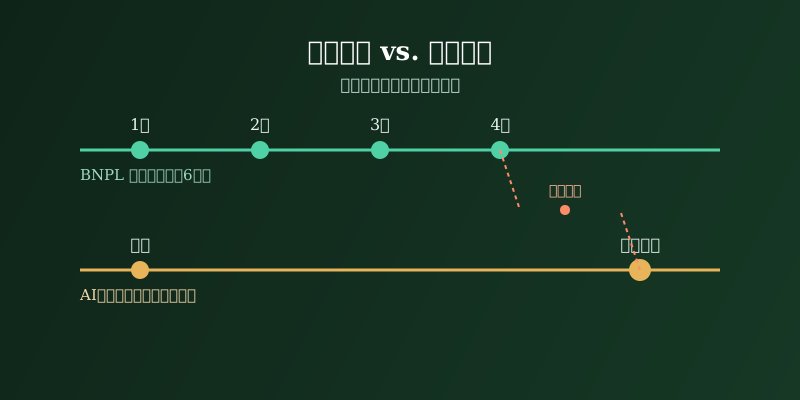
Verification Checklist
- ✓Before you buy, work out whether the BNPL plan's 4th installment date lands on or near the AI subscription's next auto-renewal date, and plan ahead if they overlap
- ✓Before canceling early, check the merchant's own refund policy for language covering orders paid via BNPL, rather than assuming "cancel the subscription" automatically stops the installment plan
- ✓In your PayPal or Klarna account, confirm whether the installment plan actually shows as canceled/completed after you cancel the merchant order, or whether it's still active and expecting further payments
- ✓If the merchant does process a refund, check whether it was applied to your remaining installment balance or deposited as account credit — the follow-up steps differ depending on which one happened
- ✓Do not rely on the specific refund process described in this article or any third-party source — PayPal's and Klarna's own official help center terms, plus the merchant's own refund policy, are the final authority
1. Why anyone uses BNPL to pay for an AI subscription
Many AI services price annual plans lower per month than monthly billing, but paying a full year upfront is still a meaningful sum for an individual or small team. That's where "buy now, pay later" (BNPL) tools like PayPal Pay in 4 or Klarna become appealing: you pay a quarter of the total at checkout, and the remaining three installments are charged automatically to your linked payment method roughly every two weeks over about six weeks, usually interest-free — turning one large annual fee into several smaller, easier-to-absorb payments. There's nothing wrong with this on its own, but it creates a common misunderstanding: assuming that once the installments are fully paid off, the "subscription" itself is somehow wrapped up too. In reality, the BNPL provider is only handling how this one purchase gets collected in installments — whether that purchase happens to be a periodic subscription that renews on its own is a completely separate question.
2. The core idea: BNPL installments and subscription renewal are two independent clocks
To understand this, separate the two different relationships at play. The first clock is the installment plan between you and the BNPL provider (PayPal Pay in 4, Klarna, etc.): on the day you check out, the BNPL provider has already paid the full order amount to the merchant (the AI provider, in this case) in one lump sum, and it then collects that money back from you over the agreed number of installments. That collection process, in principle, has nothing to do with whether the merchant keeps providing service afterward or whether you cancel your subscription — the BNPL provider is simply recovering money it already fronted. The second clock is the subscription relationship between you and the AI provider: the yearly fee you paid corresponds to a service that renews automatically around its anniversary date, and that renewal charge happens regardless of whether you originally paid by card directly or through a BNPL installment plan — the provider's renewal system typically has no idea you split the original payment into installments at all. These two clocks each run on their own rules, and neither one automatically adjusts just because the other reaches some milestone.
3. Why canceling early doesn't automatically stop the installment charges
Because the BNPL provider already paid the merchant in full upfront, canceling your AI subscription mid-plan usually isn't as simple as telling the BNPL provider "stop charging me for the rest" — that money is no longer sitting in the provider's own account, so whether you get any of it back depends on the merchant's refund policy, not something the BNPL provider can decide unilaterally. PayPal's own help pages state this plainly for Pay in 4: once your installment plan begins, you cannot pause, skip, or unilaterally cancel your remaining repayment obligations; the only way the plan changes is if the merchant processes a refund, at which point PayPal applies that refund to your outstanding Pay in 4 balance (and marks the plan complete only if the refund covers the full remaining amount). If the merchant instead issues store credit, a gift card, or cash rather than routing the refund back through PayPal, the remaining balance on the plan is still owed, because PayPal already paid the merchant on your behalf. Klarna works similarly: canceling an order and getting refunded requires the merchant to confirm the cancellation first — Klarna cannot cancel an order unilaterally — and only after that confirmation does Klarna adjust or cancel the remaining scheduled installments and refund what's already been paid. In other words, canceling the subscription doesn't by itself stop the installment charges; a merchant-processed refund has to happen first.
4. The reverse trap: paying off the installments doesn't mean the subscription ended
Beyond the "can't get the installment money back" trap, there's an opposite and equally easy-to-miss mistake: conflating "the 4 installments are paid off in about 6 weeks" with "the year of subscription access is over." In reality, the installment plan only handles how that original annual fee got collected in pieces — the subscription's own renewal date is calculated from the original purchase date as a full year later, on a completely different timescale than the roughly six weeks it takes to pay off the installments. If you don't separately track the subscription's actual renewal date after the installments are paid off, it's entirely possible the subscription auto-renews into its next annual cycle without you noticing — and whether that next year's charge goes through the same BNPL installment channel or gets charged in full to your default payment method depends on the authorization you originally set up, which is also worth confirming ahead of time.
5. Specific questions to answer before paying for a subscription with BNPL
Rather than a vague warning to "be careful with buy now, pay later," it's more useful to answer a few concrete questions before checkout. First, does the merchant's own refund policy specifically address orders paid via BNPL, and does any refund cover the full amount already paid through the installment plan? Second, once the BNPL provider's repayment schedule (say, 4 installments over 6 weeks) is converted into actual calendar dates, does it land close to or overlapping the AI subscription's next auto-renewal date — if the two dates are close together, the renewal charge and the final installment payment could both hit in a short window? Third, if you want to cancel mid-plan, is the correct path to contact the merchant for cancellation and a refund, or can you take action directly in the BNPL provider's own account — the timeline and whether you get money back can differ between the two? Fourth, if the merchant does refund you, does it land back in the installment plan, your BNPL account balance, or as merchant store credit — each requires different follow-up. The answers to all of these depend on the specific BNPL provider and specific merchant involved; there's no single rule that applies industry-wide, so check both parties' official terms or support directly before you buy.
6. Bottom line: installments solve how you pay, not when the subscription ends
Paying for an AI subscription with a BNPL tool only hands off the question of how one lump sum gets collected in installments — it's a completely separate matter from whether the subscription itself keeps auto-renewing every year, and the two run on their own independent schedules. Canceling early usually won't automatically stop the installment charges, because the BNPL provider already paid the merchant in full and any refund depends on the merchant's own policy; conversely, finishing the installments doesn't mean the subscription has ended, and you may already be into the next renewal cycle without realizing it. Before paying for a subscription this way, work out both clocks' actual dates and confirm both the merchant's and the BNPL provider's cancellation and refund processes — that's the only way to avoid falling into this gap.