
Check before you reconcile
- ✓Check that usage is image metering. On 3.0 the fields are input_image_count and output_image_count. The API says this is not token usage.
- ✓Both tiers follow output pixel area. Area at or below 2,250,000 is 1K. Above that is 2K. The reference file's own width and height do not set the tier.
- ✓A model with no published input price does not bill input. 3.0 has an input row. The 2.0 series tables list an output price only.
- ✓Bill the images that came back, not the n you requested. The worked example asks for 4, succeeds at 3, and bills 3. In group mode, omitting n sets a ceiling of 12. The actual count stays at or below that ceiling.
- ✓A failed request bills nothing and does not spend free quota. On 3.0 in Beijing, input and output share one allowance. Other regions have none. Unit prices stay on the price page.
1. The meter is images. The usage object is not tokens
The model pricing page states image generation as input images plus images that were generated successfully. A model that does not publish an input-image price does not bill input. It bills output only. The formula on that page is: fee equals input unit price times input image count, plus output unit price times output image count. A failed request produces no fee and does not spend free quota. The page says it shows list prices. Promotions live in the console. This article does not freeze one day's yuan figures into a standing rate.
The image generation and editing API defines 3.0 usage as image input and output metering, and it says so directly: this is not token usage. Text-to-image sets input_image_count to 0. Image-to-image returns the number of images you actually sent. Converting one picture into tokens for a vision model belongs to How Many Tokens Does One Image Cost in Vision APIs? A long prompt can be truncated. Truncation changes the words. It does not turn this call into token billing.
Adding a reference image is therefore not the same sentence on every series. 3.0 publishes an input row, and the API returns an input count. The 2.0 series section says billing is per image, and the tables list an output unit price with no input unit price. Under the pricing rule, a model without a published input price does not bill input. The 2.1 series accepts 1 to 10 reference images. The 3.0 series accepts 1 to 3. Those are request limits. Whether input is billed starts with the price table, then with whether input_image_count is 0.
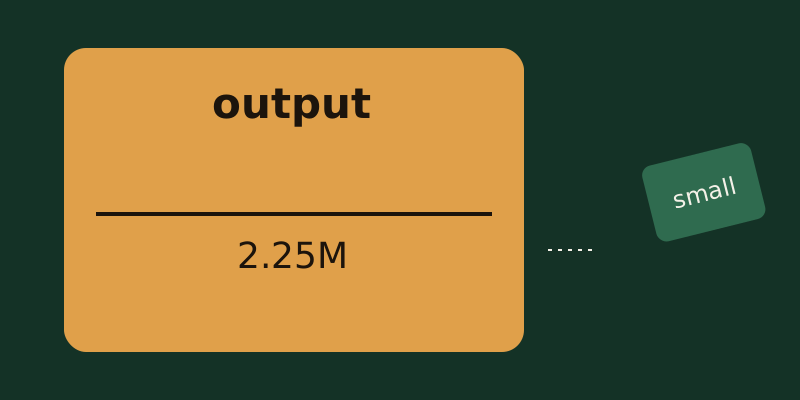
2. The 2.25 million pixel line measures the output, not the small reference
On 3.0, input_image_type and output_image_type share one ruler, and the ruler measures the output resolution's pixel area. Area at or below 2,250,000 marks the input as qima_input_1k and the output as qima_output_1k. Area above 2,250,000 marks both as 2K. A reference that is 512 pixels wide still takes the 2K input name once the output crosses the line. The tier does not follow how small the uploaded file was.
The line is easy to place. 1024 by 1024 is 1,048,576, on the 1K side. 1500 by 1500 is exactly 2,250,000, still at or below, still 1K. 2048 by 2048 is 4,194,304, already 2K. The recommended 2K square is 2048 by 2048. When size is omitted, 3.0 and 2.1 let the model recommend a resolution from the prompt. The 2.0 series default is 2048 by 2048 outright. Wan image, wan2.7-image and wan2.7-image-pro, defaults to 2K. Omitting the resolution is not a preview that stays on a small frame.
The tier name and the price row are not the same fact. The 3.0-pro table splits output into a 1K row and a 2K row, and those unit prices differ. The 3.0 table also lists 1K and 2K, but the two output unit prices are the same, and 2K does not open a different input unit price. Seeing qima_output_2k means you check whether the model is 3.0 or 3.0-pro before you treat it as a higher price row. The numbers stay on the price page as published that day. On wan2.7-image-pro, 4K is available only for text-to-image with no input image and with group mode off. Every other scene is documented as 2K only. Writing 4K on an edit or a group request does not match that support. Do not estimate it as a successful 4K image.
3. Ask for 4, succeed at 3, and the bill is 3
The pricing example requests 4 images, gets 3 URLs back, and fails the fourth. The system bills only the images that were generated. The billed count is 3. The unit price in that example is there to show the multiplication. It is not a standing rate. Reconciliation uses the successful count, not the integer written in n. The text-to-image guide puts the same rule in one sentence: n affects the fee, and the fee is the unit price times the number of images generated successfully.
Omit n and the default is 1, not 0. Qwen 3.0 and 2.1 accept 1 to 6. The two Wan image models accept 1 to 4 when group mode is off. n has to be an integer. A string returns 400. An empty image array, or null, is also 400. A prompt stopped by content inspection fails the same way. Those failures sit inside the sentence that a failed request produces no fee. Do not estimate them as if n's ceiling had already produced an image.
Group mode is a different default. Only wan2.7-image and wan2.7-image-pro support enable_sequential, and it defaults to false. Set it to true and n becomes the maximum number of images, from 1 to 12, default 12. The model decides the actual count, and that count does not exceed n. The fee is still successful images times the unit price. It is not a precharge of the ceiling. Turn group mode on without changing n, and the ceiling is already 12. If the model returns 8 successful images, the count is 8. It is not 1, and it is not 12 charged in advance. Thinking mode defaults to on, and the guide says it adds latency. With group mode on, thinking mode and the color palette are unavailable. The watermark defaults to off. Turning it on adds the label AI生成 in the corner. It does not open another price row.
4. Failure is zero. Twenty-four hours is the download clock
A failed request, on the pricing page, produces no fee and does not spend free quota. The model, the endpoint, and the API key have to belong to the same region. A cross-region call fails. The async API requires the header that enables async. Leaving it out returns an error. A task that is still queued or still running has no successful images yet. Failed or canceled is not a successful generation. Looking the task up again does not generate another batch. Usage is returned with a successful call.
Do not copy one free-quota sentence onto every model. The price page says this Qwen image 3.0 group has free quota only in China (Beijing), and other regions have none. The Beijing table writes a shared 10 images, input and output together, for 3.0 and 3.0-pro. The window is 90 days from the later of opening Model Studio, the model release, and approval. That is one shared allowance. It is not 10 input images plus another 10 output images. The 2.1-pro and 2.1-turbo rows say 10 images, and they do not say the allowance is shared. The 2.0 rows say none. Putting the shared 10 onto 2.0 invents an allowance the price page does not list.
The image URL is valid for 24 hours, and so is an async task_id lookup. That is the download clock and the query clock. The images were already counted, from usage, when generation succeeded. Failing to download after 24 hours does not return those images, and it does not bill the download again. Prompt rewriting defaults to on. It changes the wording of the positive prompt. A negative prompt past the limit is truncated. Both change words. Neither changes the successful count, and neither moves the 2.25 million pixel line. Video billed by the second is Why does a 30-second reference bill from a five-second pool? Output here is images, not seconds.
5. A top-up does not move the pixel line
Reconcile in six columns. First, the model: 3.0 has an input row and the pixel split, and the 2.0 series tables list an output price only. Second, the input count: text-to-image is 0, image-to-image is the number you sent, and an empty array fails. Third, output pixel area: at or below 2,250,000 is 1K, above is 2K, and the input tier follows that cut. Fourth, the successful count, from the URLs that came back, not from the n you requested. In group mode, also check whether the ceiling is the default 12. Fifth, failure and allowance: a failed request is zero, and Beijing 3.0 shares one allowance across input and output. Sixth, the region. Other regions do not have that allowance.
Funding the account happens before those columns settle. Swapping stablecoins on-chain into assets that can be paid in does not write a small reference file's size into the input tier, and it does not turn 3 successful images back into the 4 you requested. When that swap is the step you need, AllSwap does it without an account, and it is non-custodial. A completed swap only means the asset changed hands. The input count, the output pixel area, and the successful count still follow the call that actually succeeded.